
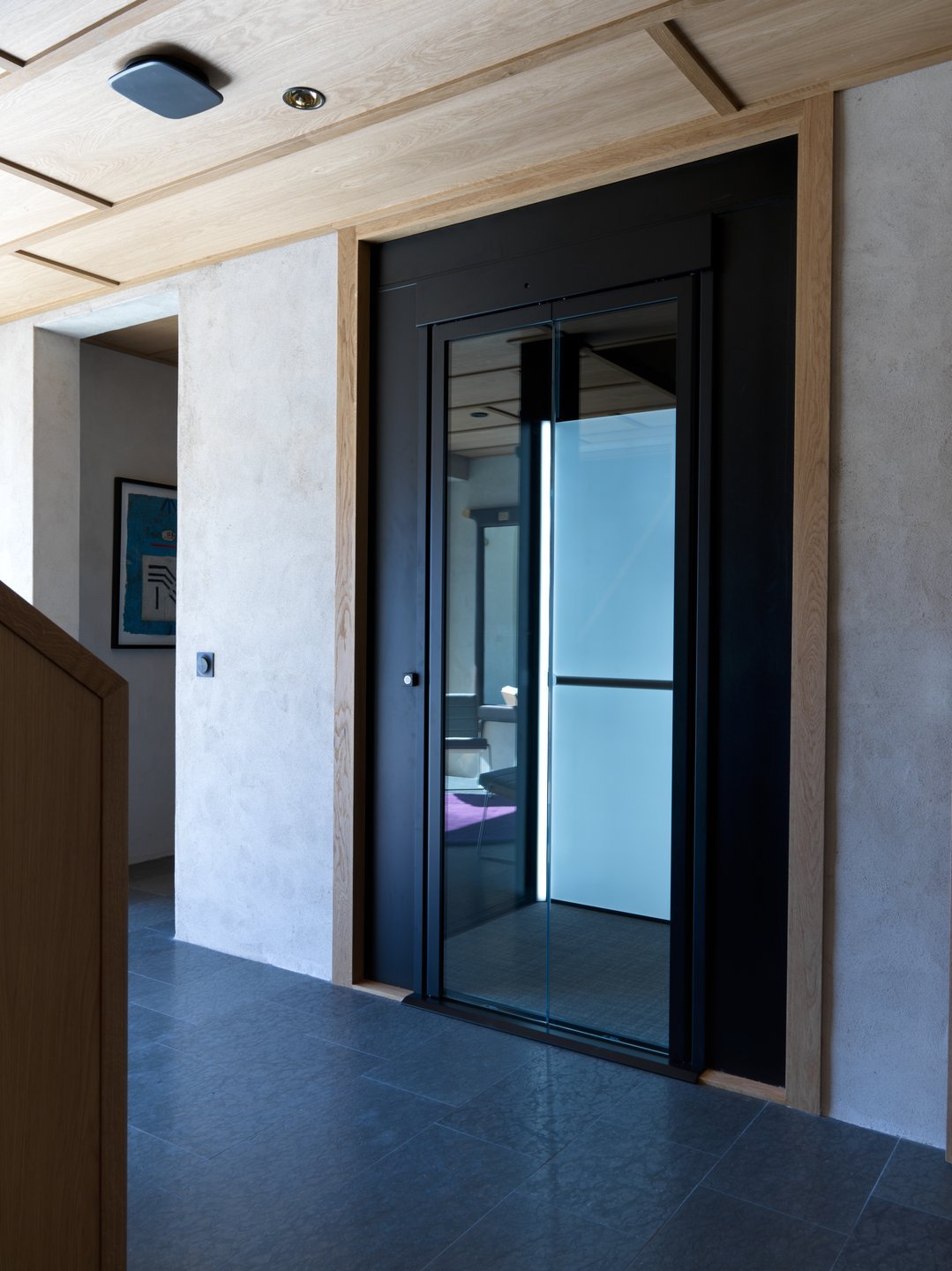
Air driven residential elevators use air pressure to raise the cabin and gravity for its controlled descent. If terms such as “pneumatic” and “vacuum lift” sound more technical than helpful, understanding this basic principle is a useful first step. The next is working out whether a lift suits your home, the people who will use it and the floors you want to connect.
This guide explains how the technology works and what to consider when assessing a lift, from available space and your home’s layout to household access needs and project timing. For Perth homeowners, it also outlines how to compare the PVE 30, PVE 37 and PVE 52 using each model’s product information. Use the practical checks below to prepare for a considered conversation about how a lift could fit your property.
Key Takeaways
- Air driven residential elevators use pneumatic vacuum technology. The operating principle is only one part of deciding whether a lift suits your home.
- Use a four-step check to map household access needs, a possible location, the floors to connect and your project stage.
- A lift in an existing home may need different design coordination from a lift included in a new build.
- Compare the PVE 30, PVE 37 and PVE 52 against your household requirements, available space, project context and each model’s specifications.
What Are Air-Driven Residential Elevators, and What Does “Air-Driven” Mean?
An air-driven residential elevator is a lift that uses pneumatic technology to move people between levels inside a home. The term “air-driven” commonly describes a pneumatic vacuum elevator, where changes in air pressure help move the cabin. This definition describes the general technology, rather than every feature or requirement of a particular lift.
A pneumatic model uses air pressure as part of its movement, unlike a conventional lift that relies on a different mechanical lifting system. That distinction helps explain how the lift works, but it doesn’t tell you how much space a specific model needs or whether it suits your property. Those details depend on the model, its configuration and the home. Perth Lift Company supplies the PVE 30, PVE 37 and PVE 52, which provide a starting point for exploring pneumatic residential lift options.
Is an air-driven lift the same as a pneumatic vacuum elevator?
In residential lift discussions, “air-driven lift”, “pneumatic lift” and “vacuum elevator” are often used for the same general technology. Product terminology can vary, so focus on the system being described rather than assuming every lift with “air” in its name has the same design. This article covers lifts for private homes, not public passenger or freight elevators.
What makes the air-driven approach distinctive?
Air pressure plays a role in moving the cabin between floors. That’s the core idea. The technology explainer below describes the movement in more detail. “Air-powered” doesn’t mean a lift uses no electricity, needs no maintenance or requires no planning. Those details, along with dimensions and other features, vary by model and installation. For a Perth home, compare the product information with your property’s layout and the needs of the people who will use the lift.
How Air-Driven Residential Elevators Work, and What Their Benefits Really Mean
An air-driven residential elevator moves its cabin by creating a pressure difference between the space above and below it. In simple terms, the system changes the air pressure around the cabin, and that imbalance enables it to travel between levels. This is the basic operating principle. The precise design and operation depend on the lift model.
How does air pressure move the lift?
Think of air pressure as a force acting around the cabin. A pneumatic system adjusts the pressure so the cabin can move along its vertical path. The key distinction is that air pressure is part of the lifting system, rather than the lift relying on the same mechanism as a conventional elevator. For details such as how a particular model operates during travel, refer to its manufacturer information.
How to read common air-lift benefit claims
“Space-saving” describes a potential design advantage, not a promise that every air-driven lift will fit every home. Compare the model’s dimensions with the space available, and consider the cabin access points, clearances and rooms it will connect. A compact-looking product still needs to work with the property’s layout.
Likewise, “quick installation” isn’t a project timeline. Site conditions, building work and coordination with a renovation or new build can all affect the work involved. Consider the lift as part of the wider project, not in isolation.
Safety and accessibility depend on the model and how it suits the people using it. Consider the cabin, entry and exit, controls and the household’s access needs together. The term “air-driven” alone doesn’t guarantee a particular safety feature or accessibility outcome.
For a practical discussion of lift technology and your plans, speak with Perth Lift Company. The team works with homeowners, builders and architects on residential lift projects across Perth and Western Australia.
How to Assess Air-Driven Elevator Suitability for a Perth Home
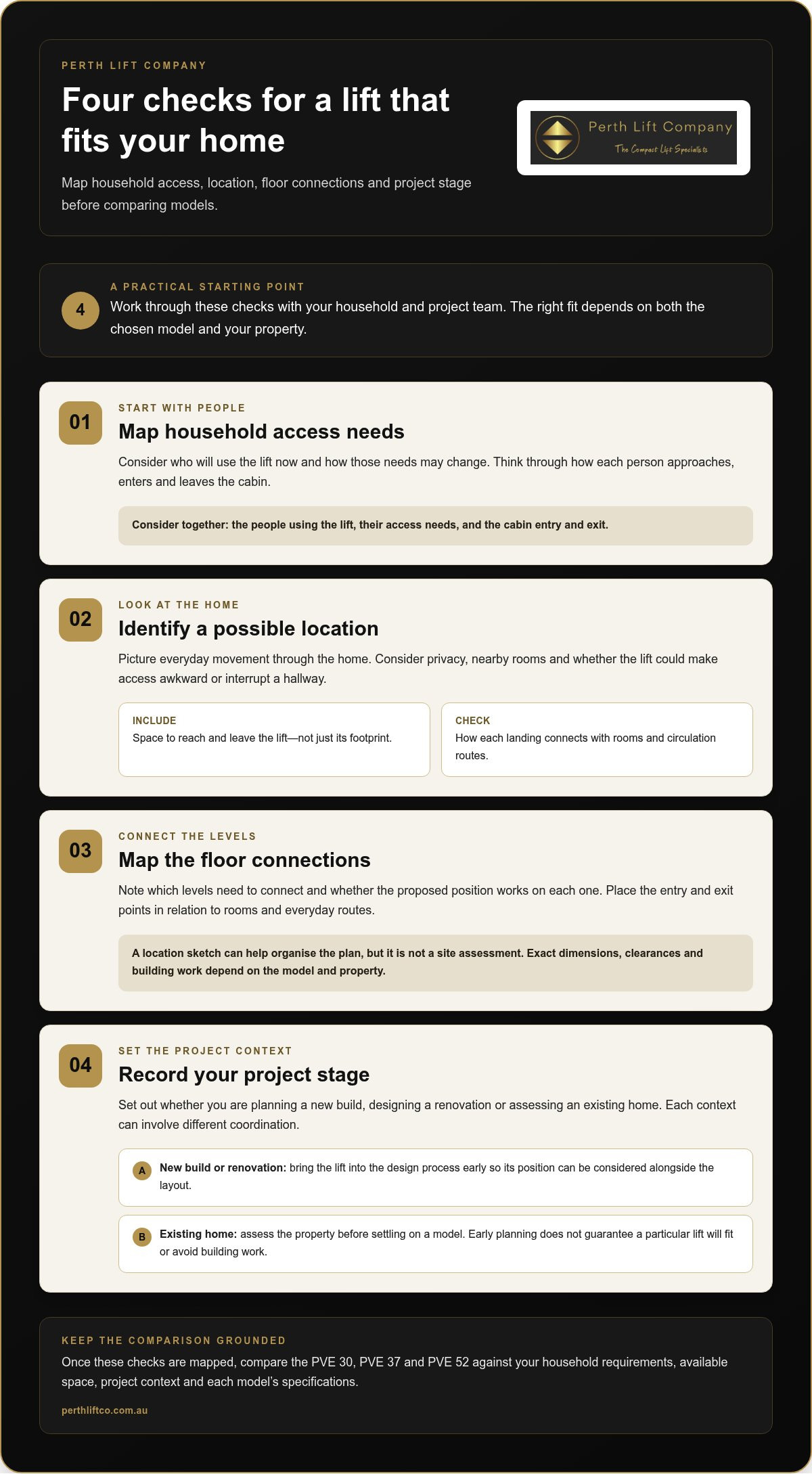
Before comparing models, map the lift to the people who’ll use it and the way your home works. This four-step checklist helps organise the discussion with your household and project team. Assess air driven residential elevators in the context of both the selected model and the property.
- Start with household access needs. Consider who will use the lift now and how those needs may change. Think about how each person approaches, enters and leaves the cabin.
- Identify a possible location. Consider everyday movement through the home, privacy and the effect a lift could have on nearby rooms. Include the space needed to reach and leave the lift, not just its footprint.
- Map the floor connections. Note which levels need to connect and whether the proposed position works at each one. Consider where the entry and exit points would sit in relation to rooms and circulation routes.
- Set out the project stage. Record whether you’re planning a new build, designing a renovation or assessing an existing home. Each context can involve different coordination.
What should you assess before choosing a lift location?
Picture daily movement through the home. Would the proposed position interrupt a hallway, sit near a private area or make access awkward on one floor? Consider how people approach and leave the lift, and whether each landing gives them a practical route to the rooms they use. Exact dimensions, clearances and building work depend on the chosen model and property, so a location sketch is a useful planning tool, not a site assessment.
When should a lift enter the home design process?
Bring the lift into a new-build or renovation design early, so its position can be considered alongside the layout. In an existing home, assess the property before settling on a model. Early planning doesn’t guarantee a particular lift will fit or avoid building work. Perth Lift Company works with homeowners, builders and architects to tailor residential lift planning to the household and project. Compare its residential lift options against your layout and project needs.
Explore Air-Driven Residential Elevator Options with a Perth Lift Specialist
Perth Lift Company supplies and installs residential lifts across Perth and Western Australia, and is the regional agent for PVE. To compare models, bring together four practical considerations: household requirements, available space, project context and each model’s current specifications. This keeps the decision focused on how a lift may suit your home, rather than assumptions based on a model name or a general claim about air driven residential elevators.
How can you compare the PVE 30, PVE 37 and PVE 52?
Use the same questions for each model. Who will use the lift? Where could it sit? Which levels should it connect? What do the product details say about its dimensions and other specifications? Read the information for the PVE 30 model and the PVE 52 model, then compare them with the PVE 37 information. Don’t infer passenger capacity or accessibility suitability from a model name alone.
- Household requirements: Note the access needs the lift should address, both now and as the household changes.
- Available space: Consider where a lift could fit, how people would access it on each floor and how it may affect movement through the home.
- Project context: Identify whether you’re planning a new build, renovation or change to an existing home.
- Model specifications: Compare the current product details with your layout and requirements.
What happens after you identify a possible fit?
Perth Lift Company works with homeowners, builders and architects to plan residential lift solutions around the property and household. Bringing the lift into the wider design discussion early can help coordinate decisions, including home lift planning for builders. For an existing home, a property-specific conversation helps establish how the lift could work with the layout.
If you’re in Perth, discuss your residential lift project with Perth Lift Company as you consider your home’s layout and the PVE options.
Make Your Next Step a Clear One
Choosing air driven residential elevators is a home-planning decision, not a choice to make on a headline benefit alone. Before moving ahead, note which levels you want to connect, who will use the lift, where it might fit and whether your home is being renovated or newly designed. You don’t need every detail decided. A clear picture of your priorities is a useful place to start.
Model information and a property-focused discussion can then help turn early research into a considered direction. Perth Lift Company provides residential lifts and mobility solutions, working with homeowners, builders and architects to tailor lift planning to each home and household.
Discuss a residential lift for your Perth home with Perth Lift Company and take the next step with a clearer sense of what matters to you.
Frequently Asked Questions
Do air-driven residential elevators need regular maintenance?
Yes, regular maintenance is important for safe operation and to meet the requirements that apply to the lift. The service schedule and tasks depend on the particular model, so follow its manufacturer guidance rather than assuming all air-driven residential elevators need identical attention. Keep maintenance records with your home documents and include lift servicing in your ongoing household planning.
What happens to an air-driven elevator if the power goes out?
The response to a power failure depends on the model, so don’t assume the cabin will lower, remain operational or have battery backup. Before choosing a lift, read the manufacturer’s instructions for power interruptions and the model’s emergency procedure. If someone in your household may need assistance during an outage, include that scenario in your access and household safety planning.
Can an air-driven residential elevator be installed outdoors?
Don’t assume a lift designed for an indoor position is suitable for outdoor use. Exposure to Perth’s sun, rain and changing conditions can affect the requirements for the lift and its location. Outdoor suitability depends on the specific model and installation. Treat an outdoor lift as a purpose-planned option, assessing its product information alongside the property’s exposure.
Are air-driven residential elevators energy efficient?
Energy use varies by lift design and operation, so “air-driven” alone doesn’t tell you how much electricity a particular model uses. For a meaningful comparison, look at the manufacturer’s information on energy use during typical operation, including travel between levels. In a Perth home, weigh your household’s expected use alongside the lift’s operating requirements.
Can an air-driven home elevator be used by a wheelchair user?
Possibly, but suitability depends on the chosen model’s cabin dimensions, doorway, load capacity and the space needed to approach and turn. The wheelchair and the user’s access requirements matter too. Compare those needs with current model specifications rather than relying on a general claim about accessibility. In Perth, including the intended user in the planning discussion can help identify practical requirements early.