
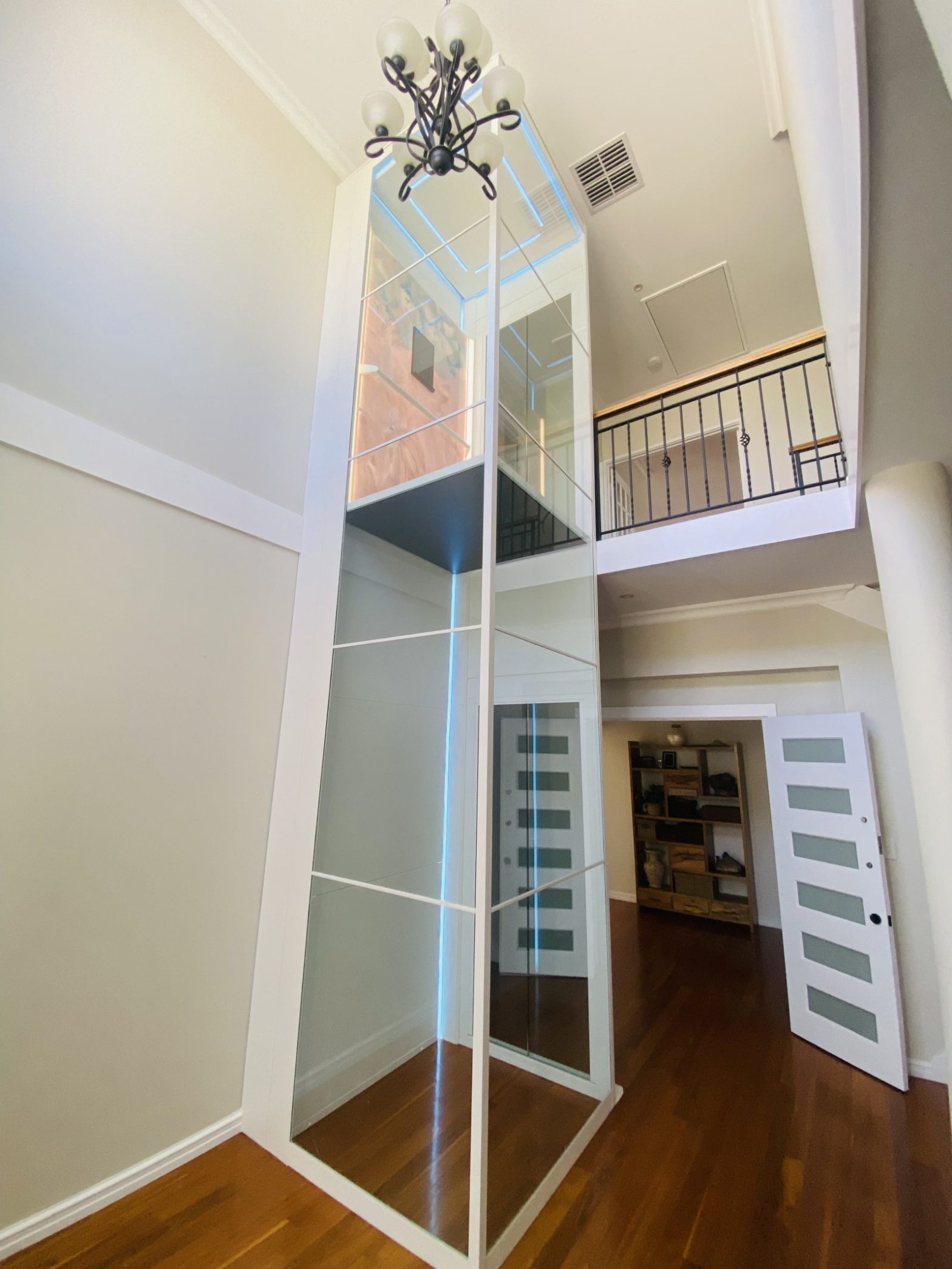
Could a home lift seem to be working normally while still showing signs that deserve attention? It can be hard to know what to look for, especially when lift systems have different care needs. This home lift service and maintenance checklist separates observations you can make during everyday use from checks that belong to a qualified lift technician. It can help you notice and describe changes without attempting adjustments or repairs yourself.
You’ll learn what to observe, what a professional inspection may cover and how to keep useful service records. The right maintenance plan depends on the lift model and its manufacturer’s guidance, so care for a SWIFT lift may differ from care for a pneumatic vacuum elevator. You’ll also find practical steps for preparing for an inspection and organising records, with Perth homes and conditions in mind.
Key Takeaways
- Use the home lift service and maintenance checklist to separate everyday observations from work that belongs to a qualified technician.
- Understand the broad areas a professional inspection may cover, while recognising that checks vary by lift model.
- Note unusual sounds, inconsistent stopping, changes to doors or visible damage. Report concerns rather than attempting technical adjustments.
- Gather the lift manual, installation details, previous service records and operating notes to help plan servicing around the manufacturer’s guidance.
Home lift service and maintenance checklist: why regular care matters
Noticing a change is not the same as servicing a lift. You can observe how it behaves during normal use, but inspections and technical work need to follow the lift’s design and manufacturer guidance. A consistent approach helps you spot changes in operation or visible wear and gives you clear details to share with a qualified lift professional.
Preventive maintenance means checking and caring for a lift before a concern becomes an unexpected interruption. It doesn’t guarantee faults won’t occur. It gives homeowners and technicians a clearer view of the lift’s condition over time. Use this home lift service and maintenance checklist as a guide, not as a substitute for model-specific instructions.
What counts as home lift maintenance?
There are three related but different activities:
- User observations: notice changes during everyday operation and record when they occur.
- Scheduled inspection: arrange a planned review at intervals guided by the lift’s documentation and condition.
- Technician-performed servicing: have a suitably qualified lift professional assess the lift and carry out technical work.
The manual identifies the installed system and its care instructions. Previous service records show what has already been inspected or addressed. Together, they’re a sound starting point for planning.
Why a single service interval does not suit every lift
Lift design, usage and manufacturer instructions all influence a suitable maintenance plan. A SWIFT lift and a pneumatic vacuum elevator are different systems, so don’t assume they have the same servicing needs. The Home lift overview describes the range of systems and illustrates why the specific model matters.
General schedules, such as annual or twice-yearly visits, are not universal legal or technical requirements. Start with the manufacturer’s guidance, then have a suitably qualified lift professional consider the particular system and its operating history when setting service timing.
Home lift service checklist: what a qualified technician should assess
A professional inspection is different from the observations you make during everyday use. A technician assesses how the lift operates and checks its fitted components, then carries out any required adjustments or technical work. The areas below are a general framework, not a promise that every residential lift has the same equipment or needs identical procedures.
The lift model determines the service checklist because each system has its own components, operating method and manufacturer instructions. A SWIFT Pro Lift and a PVE 30 lift are distinct residential systems. An inspection should reflect the specific installation rather than follow a generic template.
Safety, doors and controls
Depending on the lift, a qualified technician may assess travel and stopping, door operation, call controls and indicators, as well as fitted safety devices. If the lift has an alarm or emergency communication equipment, its condition and operation may also be included. The exact checks depend on the equipment installed and the manufacturer’s procedures.
Adjustments, lubrication, and electrical or mechanical work belong to qualified personnel. Don’t bypass safety devices or attempt technical repairs yourself. The linked OSHA regulations for elevators concern US marine-terminal workplaces, not Perth homes, so they don’t set a residential lift’s inspection schedule.
Drive system and lift-specific components
Inspection procedures differ between lift technologies. A technician may assess components specific to the system and look for visible wear, but the relevant parts and methods depend on the installed model. The manual identifies which checks apply and what the manufacturer requires. A generic checklist shouldn’t replace those instructions.
If you’re planning a new installation, comparing residential lift options can help clarify how different systems might suit your home. A model-specific approach keeps the home lift service and maintenance checklist focused on relevant checks, not tasks that may not apply.
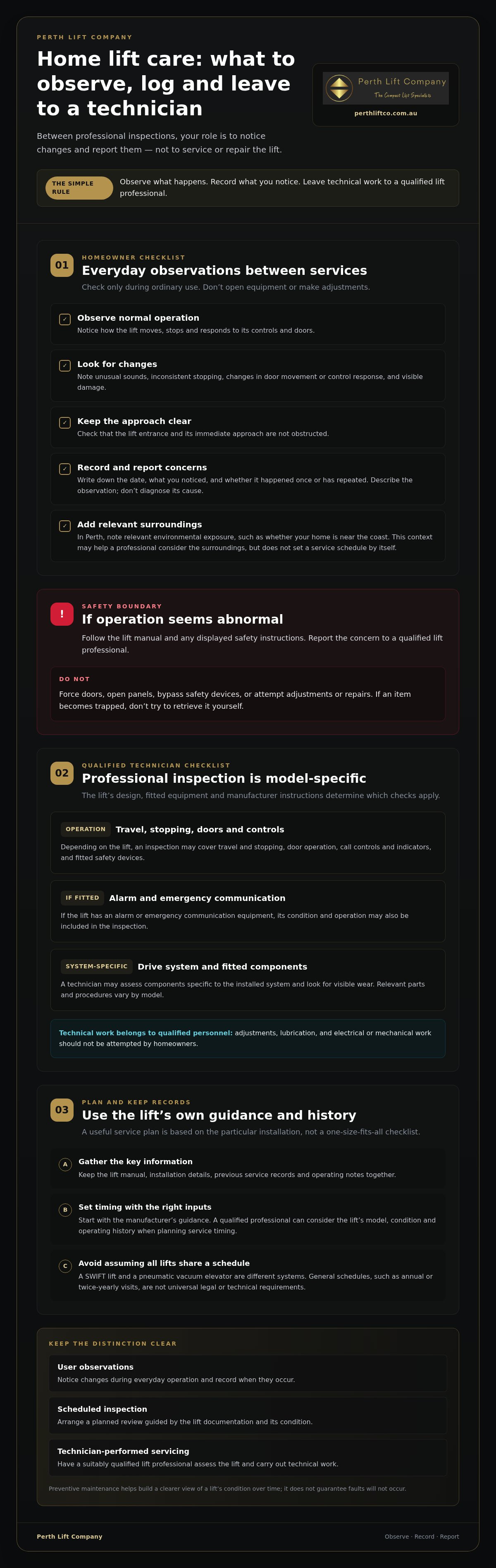
Home lift maintenance checklist for homeowners between services
Between professional inspections, your role is to observe and report, not to service or repair the lift. A simple routine helps you pass on useful information without opening equipment or making adjustments.
- Observe normal operation. During ordinary use, notice how the lift moves, stops and responds to controls and doors.
- Note changes. Record unusual sounds, inconsistent stopping, changes in door movement or control response, and visible damage.
- Keep access areas clear. Check that the lift entrance and the immediate approach are not obstructed.
- Record and report concerns. Add observations to a log and share them with a qualified lift professional.
In Perth, note relevant environmental exposure, such as whether your home is near the coast. This context may help a professional consider the lift’s surroundings alongside its model and service history. It doesn’t determine a servicing schedule by itself.
Safe observations to add to a home lift log
Keep each entry factual. Write down the date, what you noticed and whether it happened once or has repeated. For example, describe a new sound during travel or a door that seems to move differently. Don’t diagnose the cause. These details help a technician understand what you’ve observed.
When to stop using the lift and seek help
If operation seems abnormal, follow the lift manual and any displayed safety instructions. Don’t force doors, open panels, bypass safety devices or attempt adjustments and repairs. If an item becomes trapped, don’t try to retrieve it yourself. Report the concern and follow the manufacturer’s instructions for what to do next.
A clear log makes the home lift service and maintenance checklist more useful by separating what you observed from a technical assessment. If you’re planning a new installation, explore residential lift options to consider which system may suit your home.
Plan home lift servicing in Perth: records, timing and next steps
Good records make it easier to plan professional advice and understand the lift’s history. Bring together the operating manual, installation details, previous service records and notes about changes in operation. If you’re unsure of the model, look for identification information in the documentation rather than opening panels or equipment.
Use the manufacturer’s instructions as the starting point for service timing, then discuss the schedule with a suitably qualified lift professional who can account for the specific system. Don’t treat a general recommendation as a fixed rule for every home lift. If you’re planning a new build or renovation, include practical service access in the design. Home lift planning for builders can help frame that consideration.
A simple service-record template
Keep records together in a folder or digital file. For each visit or reported concern, capture:
- Date and a brief description of the work recorded.
- Technician details and any report or paperwork provided.
- Observations shared before or during the visit.
- Recommended follow-up and whether it has been completed.
This format helps you spot recurring concerns and distinguish them from work already addressed.
What to prepare before arranging professional advice
Note the lift type and any model details you have. Describe when an operating change occurs and mention access constraints that could affect an inspection. Keep the description factual, such as when a sound began or whether a behaviour has repeated. Don’t attempt to diagnose the cause.
For legal duties or standards, check current Western Australian guidance and whether the requirements apply to your particular lift and situation. For broader ownership planning, the Perth home lift price guide may help you consider long-term costs. If you’re planning an installation, explore residential lift options for your home.
Make your next lift decision with confidence
A home lift is part of how your household uses its space every day, so it’s worth building care into your plans rather than waiting until a concern feels urgent. Keep records accessible, follow the guidance for your particular system and use your observations to support informed conversations with a qualified lift professional. This home lift service and maintenance checklist is a practical starting point. Your ongoing plan should reflect the lift and your home.
If you’re considering an installation or planning for changing access needs, Perth Lift Company supplies residential options including SWIFT Pro Lifts and pneumatic vacuum elevators. The locally owned and operated specialist serves homeowners in Perth and across Western Australia, with lift solutions for accessible, future-ready living.
Explore residential lift solutions for your home and take the next step with a clearer picture of your options.
Frequently Asked Questions
How often should a home lift be serviced?
The right service interval depends on the lift model, manufacturer’s instructions, how it’s used and its service history. Use the home lift service and maintenance checklist alongside the lift’s own documentation, rather than treating a general schedule as universal. If you’ve recently moved into a home and don’t know the service history, gather the available lift details and discuss a suitable starting plan with a qualified lift professional.
Can I do home lift maintenance myself?
You can observe the lift during normal use, clean the cabin as the manual directs and note any concerns. Technical inspection, adjustments, lubrication and repairs should be handled by appropriately qualified personnel. Don’t open panels, bypass safety devices or force doors. If a control behaves differently, record what happened and follow the manufacturer’s instructions rather than investigating inside the equipment.
What should I do if my home lift stops between floors?
Stay inside and follow the lift’s emergency instructions. Use fitted alarm or communication equipment if available. Don’t force the doors or try to climb out, as the lift may move unexpectedly. Keep others from interfering with the equipment and contact appropriate assistance. If anyone is in immediate danger, call the relevant emergency services in Australia. Once safe, note what happened for the professional assessment.
Does a home lift need maintenance when it is rarely used?
Low use alone doesn’t establish that a lift can go without inspection. Components and fitted safety devices may still need attention in line with the manufacturer’s guidance and the lift’s service plan. If the lift is used only occasionally, record that pattern and any periods it remains idle. Share this context with a qualified lift professional when discussing the inspection plan.
Are home lift maintenance requirements the same across Western Australia?
Not necessarily. Applicable guidance can depend on the lift design, manufacturer’s instructions and circumstances of the installation. A checklist for a commercial lift, or a schedule intended for another model, may not suit a residential lift in Perth. Before relying on a compliance claim, check current Western Australian requirements and whether the relevant standards apply to your particular lift and situation.