

When stairs become tiring or difficult, a home elevator for seniors may offer another way to travel between floors. Whether it suits a particular person depends on their daily routines, access needs and the layout of their home, not simply on the lift’s name.
Space, building work and disruption are also worth considering. A stairlift or platform lift may suit a different kind of journey, so comparing the options against the person’s needs can make planning more straightforward.
This guide explains how residential lifts can support access between floors, how home elevators differ from stairlifts and platform lifts, and what to consider when planning a solution in Perth. Perth Lift Company is a locally owned and operated specialist that works with homeowners, builders and architects on tailored lift projects. The goal is to help you weigh up the person’s priorities alongside the practicalities of the home.
Key Takeaways
- A home elevator for seniors connects levels within the home and may make everyday travel between floors more practical.
- Compare home elevators, stairlifts and platform lifts by the journey each supports and the person’s access needs.
- Start planning by mapping daily routes, noting what needs to be carried and reviewing the home’s layout.
- Consider residential lift options, including SWIFT Pro Lifts, in relation to the older person’s needs and the property.
How a home elevator for seniors can support ageing in place
A home elevator is a residential lift that carries people between levels inside a house. It provides an alternative to using the stairs for every trip. For an older person, it may make regular journeys, such as reaching an upstairs bedroom or downstairs living area, more practical. It does not guarantee safety or replace other support. Suitability depends on the person, the property and the project. For a general overview of types of elevators, see Wikipedia.
The first step is to look at how the household uses each level. Which rooms does the older person need to reach each day? Are there particular trips they avoid or need help with? Perth Lift Company works with homeowners, builders and architects to develop tailored residential lift projects. A SWIFT Pro residential lift is one option to consider in the context of the home’s layout and the person’s access needs.
What changes when stairs become difficult?
Stairs can take more effort when someone is tired. Carrying laundry, groceries or other belongings between floors can add another challenge, and the person may need help to move items or make a trip. Write down which journeys are difficult, how often they come up and what makes them challenging. This helps clarify whether another way to travel between levels could address a meaningful day-to-day need.
What does ageing in place mean for a two-storey home?
Ageing in place means planning for the possibility of continuing to live in a familiar home as needs change. In a two-storey house, consider how the person will access bedrooms, bathrooms and shared living areas, both now and as their needs evolve. A lift is one home modification to consider, but it cannot guarantee someone will remain at home indefinitely. The decision should reflect the person’s priorities, the home’s layout and the work involved.
Home elevator, stairlift or platform lift: which suits a senior’s needs?
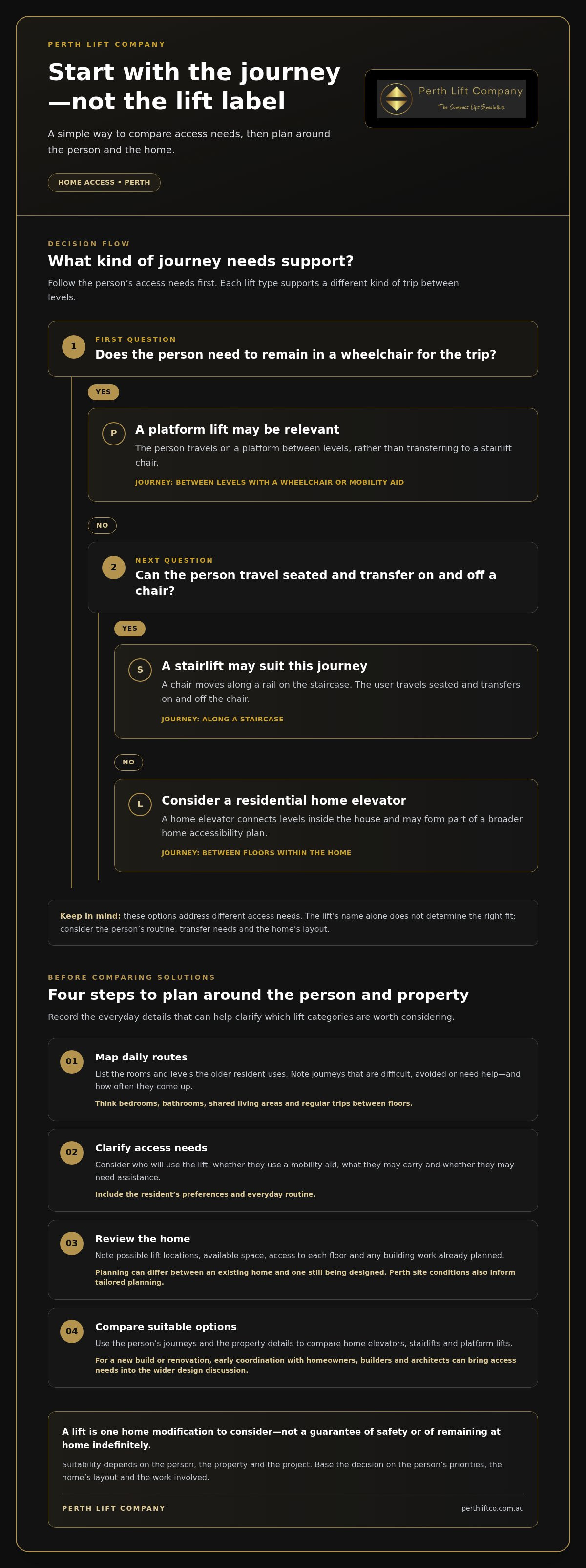
Finding stairs difficult does not mean every older person needs the same kind of lift. Start with the journey they need to make and how they will use the lift.
| Lift type | Intended access need | What the journey involves |
|---|---|---|
| Home elevator | Travel between levels within the home | A lift connects floors as part of broader home accessibility planning. |
| Stairlift | Travel along a staircase | A chair moves on a rail, so the user travels seated and transfers on and off. |
| Platform lift | Access between levels while using a wheelchair or mobility aid | The person travels on a platform rather than transferring to a stairlift chair. |
These options address different access needs, and none is automatically right for every household. A AARP guide to home elevators for seniors also outlines considerations when evaluating this type of home modification.
When might a residential home elevator be worth considering?
A residential elevator may suit a household looking for a lift that connects floors as part of a wider accessibility plan. Consider the person’s mobility and routine, who else may use the lift, and the space available in the home. These practical details help shape the project. The label “home elevator” alone cannot determine whether it is the right fit.
When could another mobility lift category be relevant?
A stairlift may suit someone who can travel seated and transfer to and from the chair. A platform lift may be relevant when a person needs to remain in a wheelchair for the trip between levels. Perth Lift Company supplies and installs stairlift and platform lift solutions. Compare these with residential elevators by considering the journey, the person’s transfer needs and the home’s layout. For more on platform lift considerations, see the vertical platform lift buying guide.
Planning a home elevator for a senior: assess the person and property
A useful plan starts with the person’s everyday needs, then considers how the home can accommodate them. Use this four-step checklist to describe what matters before exploring a home elevator for seniors or another mobility solution.
- Map daily routes. Note which rooms and levels the older resident uses, and which journeys feel difficult or require help.
- Clarify access needs. Consider who will use the lift, whether they use a mobility aid, what they may carry and whether they may need assistance.
- Review the home. Note possible lift locations, available space, access to each floor and whether the property is already built or still being designed.
- Discuss suitable options. Use these details to compare lift categories and how each may fit the person’s routines and the property.
What should families note about daily use?
Start with the older resident’s perspective. Record which rooms and levels matter most, when they are used and whether carrying items or having someone nearby affects access. Include the resident’s preferences, and involve family members or other relevant support people where appropriate. A clear picture of daily use keeps the planning focused on the person’s real routines.
What property details shape lift planning?
The available space and the relationship between floors help inform possible lift locations. Planning can differ between an existing home and one still being designed, so note the layout and any building work already planned. Requirements depend on the details of the project and need to be established for the specific home. Perth site conditions also inform tailored planning.
For a new build or renovation, early coordination with the project team can bring the person’s access needs into the wider design discussion. Perth Lift Company works with homeowners, builders and architects on tailored lift projects. Use the home lift planning checklist for builders as part of that early coordination, or explore lift planning with Perth Lift Company.
Finding a home elevator solution for seniors in Perth
Once the person’s access needs and the home’s layout are clear, compare the lift categories that could suit the project. A home elevator for seniors is one possibility, alongside other residential lift and mobility options. A useful discussion connects everyday routines, the floors involved and the property, rather than starting with a model name.
Perth Lift Company supplies and installs residential lifts and mobility solutions in Perth and Western Australia. Its range includes SWIFT residential lifts, pneumatic vacuum elevators, vertical platform lifts and stairlifts. Each category can be considered against the household’s priorities and the project’s requirements, without assuming one option suits every home.
How can a tailored lift discussion help?
Perth Lift Company works with homeowners, builders and architects on tailored lift projects. Bring together the older resident’s routines, who will use the lift, what they may need to carry and the property’s layout. These details help connect the family’s priorities with the practical considerations of the project. Families considering SWIFT Pro Lifts can review the SWIFT Pro Lift information as part of that discussion.
What is a straightforward next step for Perth families?
Before getting in touch, note the main access challenge and the floors involved. It can also help to list who will use the lift, which rooms they need to reach and whether the home is being renovated or newly designed. These details give the planning conversation a clear starting point and help relate the options to the household and property.
For a practical discussion about your home, access needs and possible next steps, discuss a home lift for your family with Perth Lift Company.
Take the next step towards a more accessible home
Planning a home elevator for seniors is an opportunity to look beyond today’s stair routine and consider how the home could support changing access needs over time. Talk with the older person about what they want to keep doing at home, which priorities matter most and what changes feel manageable. Keep their preferences central as you explore possible solutions.
For Perth families, a tailored project brings the resident’s priorities and the property into the same conversation. Perth Lift Company is a locally owned Western Australian specialist that works with homeowners, builders and architects to shape lift solutions around individual projects. This gives families a practical starting point while recognising that each home and household has different needs.
When you’re ready to take the first planning step, start a conversation about your family’s home lift needs with Perth Lift Company. Sharing what matters to the person and the home can help make the next decisions more straightforward.
Frequently Asked Questions
Can a home elevator be installed in an existing house?
Yes, a home elevator can be considered for an existing house, with each retrofit assessed individually. The available footprint, floor arrangement and possible lift locations all inform the plan. For example, consider how a proposed position relates to doorways and room use, not just whether an area looks clear. A project-specific assessment helps establish what the property and proposed work involve.
Is a home elevator better than a stairlift for seniors?
Neither option is automatically better for every older person. A home elevator travels between floors, while a stairlift follows the staircase and involves using a seat. Someone who can transfer to a seat may have different access needs from someone who wants to travel between levels with a mobility aid. Consider the person’s movement, regular journeys and how the lift would fit the home.
What type of home lift is suitable for an older person?
The suitable lift depends on the person’s access requirements and the home’s layout. A home elevator may suit a household planning travel between floors; a stairlift or platform lift may address a different kind of journey. When considering a home elevator for seniors, think about who will use it, whether they use a mobility aid and how their needs may change. Then compare the options against the property.
Can a home elevator help seniors stay in their own home?
A home elevator may support ageing in place by providing another way to access different levels, but it cannot guarantee someone will be able to remain at home. It is one consideration in a broader look at how the house supports daily living. Families can also consider whether essential rooms are accessible and whether other home changes may be needed as circumstances evolve.
How do Perth families start planning a home elevator?
Start by noting the main access challenge, the floors involved and which rooms the older person needs to reach. Record who may use the lift and whether the home is existing, being renovated or still in the design stage. Perth families can discuss these details with Perth Lift Company to explore a tailored solution that considers the household’s priorities and the property.