
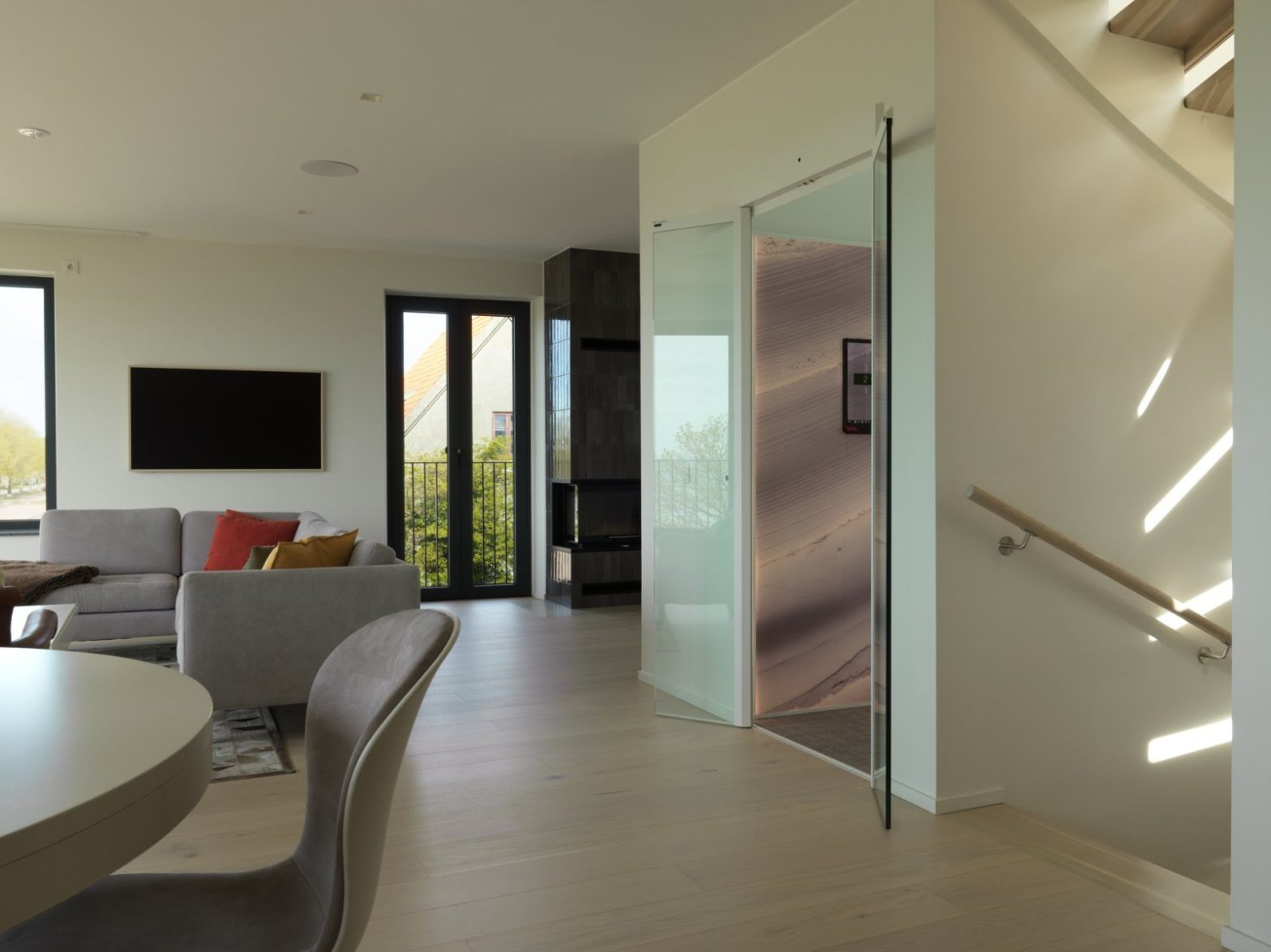
Yes, a home lift can be installed in an existing Perth home if the design suits the property. Council or building approval may be required, so choosing a home lift supplier in Perth means considering both the lift and the requirements for your home.
It’s understandable to wonder whether an established home can accommodate a lift without extensive changes. The right option depends on available space, the layout between floors and the accessibility needs the lift must meet.
This guide explains what to consider for a retrofit, including permits, accessibility, local support and ongoing service coverage. You’ll come away with a clearer sense of the questions that shape a suitable home lift solution and the next steps to plan a project with confidence.
Key Takeaways
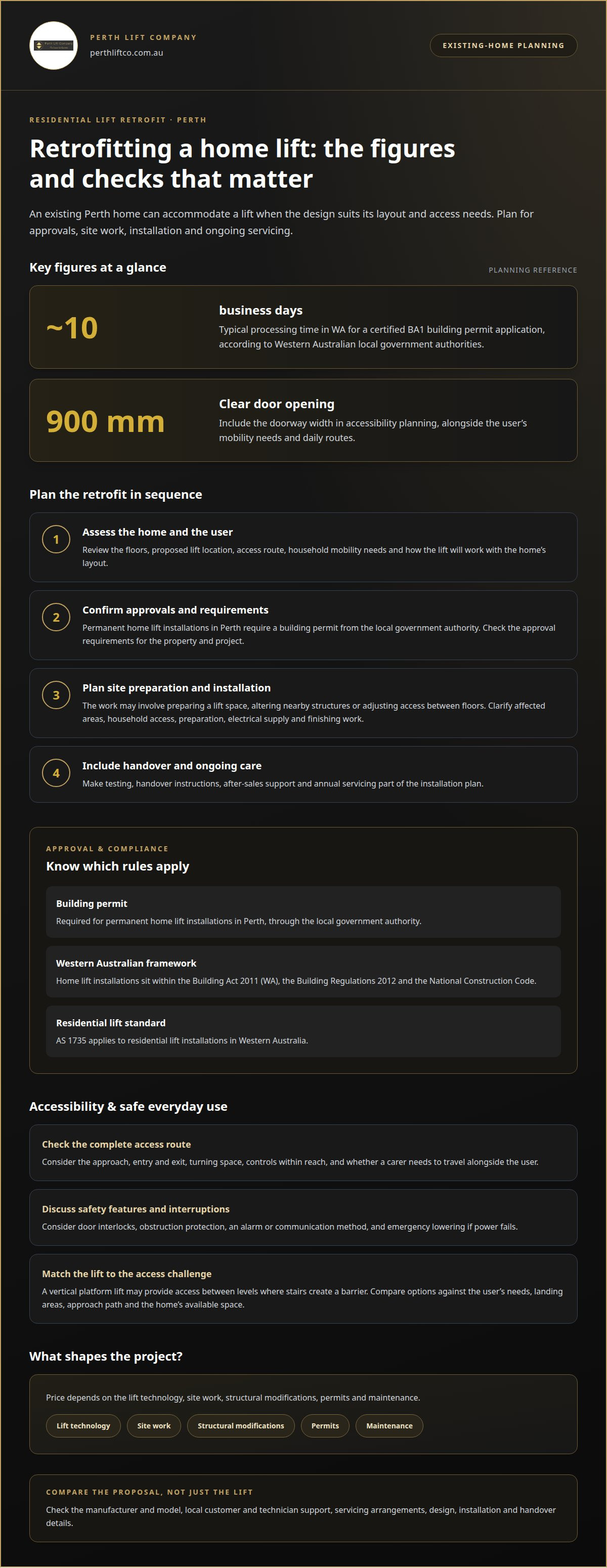
- Existing homes can accommodate a lift when the design suits the property and the required permit is addressed; a certified BA1 application in WA typically takes around 10 business days to process, according to Western Australian local government authorities.
- Compare local customer and technician support by considering how service coverage and ongoing maintenance fit your home and long-term needs.
- Plan accessibility around the person using the lift, including a clear door opening of 900 mm; NDIS Home Modifications support may be relevant when an occupational therapist assesses a lift as necessary.
- Match the lift solution to the home’s layout and the access challenge, then consider how coverage across Perth and Western Australia supports the project beyond installation.
Can you install a residential elevator in an existing home?
An existing home can be fitted with a residential lift when its design suits the layout and access needs. Planning should cover approvals, site work, installation and ongoing servicing.
Installation planning and scheduling
Start by assessing the floors, proposed lift location, access route and household mobility needs. The location affects the installation and how the lift works with the home’s layout. Plan the project in sequence, from design decisions and approvals to preparation, installation and handover. Include annual servicing in your discussion so ongoing care is part of the decision.
Installation requirements and disruption
Retrofitting can involve preparing a lift space, altering nearby structures or adjusting access between floors. The exact work depends on the home’s construction and the selected lift technology. Before work starts, clarify which areas may be affected, how household access will be managed, and what preparation is needed. Include electric supply and finishing work in the project discussion. Price depends on lift technology, site work, structural modifications, permits and maintenance, and is given after a quote request.
Local council experience and approvals
Permanent home lift installations in Perth require a building permit from the local government authority. According to Western Australian local government authorities, a certified BA1 building permit application in WA typically takes around 10 business days to process. Home lift installations sit within the Building Act 2011 (WA), the Building Regulations 2012 and the National Construction Code; AS 1735 applies to residential lift installations in Western Australia. Perth suppliers offer residential lifts, but brands vary by supplier. Compare the manufacturer, model and local support arrangements in each proposal rather than assuming every supplier installs the same brands.
Safety standards and emergency backup
AS 1735 and the National Construction Code are relevant to residential lift installations in Western Australia. For accessibility, consider how the entrance and controls suit the person’s mobility needs and daily use. Discuss features such as door interlocks, obstruction protection, an alarm or communication method, and emergency lowering if power fails. These considerations help clarify how occupants would operate the lift and respond to an interruption. Include testing, handover instructions and after-sales support in the installation plan, so safe operation remains central beyond the building work.
Local customer service and technician support
Local support matters after a residential lift is installed. When choosing a home lift supplier in Perth, find out how to report an issue and arrange guidance or technician support. Ask what annual servicing involves and what to expect after a service visit. Clear arrangements help you understand how the lift will be supported in everyday use.
Choosing a lift means considering more than how it operates. Think about who will use it, which floors they need to reach and how the household would respond if the lift needed attention. Someone with limited mobility, for example, may rely on it to reach a bedroom or bathroom. Discuss how regular servicing and support fit those daily routines.
The lift type, available space and home construction shape the options. A residential lift may suit one layout, while a platform lift may work better for a particular access route. Consider the entrance, space inside the lift and how it fits the surrounding area. These details help match the equipment to the home’s actual use.
A lift’s finish and controls can help it fit the existing interior. Discuss cabin finishes, lighting, control placement and door appearance, balancing aesthetics with accessibility and ease of use. Perth Lift Company’s lift options include customisable finishes, so you can consider the design alongside the practical requirements.
When choosing a home lift supplier in Perth, write down your priorities: who will use the lift, their mobility needs, preferred appearance and servicing requirements. Compare each proposed option against those priorities. Ask for a clear explanation of the design, installation and handover, as well as the annual servicing recommendation. This makes it easier to assess how the lift could support your household over time.
Home lifts for accessibility and ageing in place
Start accessibility planning with the person who will use the lift and their daily routes. Consider wheelchair access, entry space and how needs may change over time.
Disability and wheelchair access
For wheelchair users, assess the full route from approach to exit, not just the cabin. Consider whether the doorway is wide enough for the wheelchair user to enter and exit comfortably. Also consider turning space, controls within reach and whether a carer needs to travel alongside the user. These details influence the lift’s position and how comfortably it supports everyday mobility.
Platform lifts for accessibility
A vertical platform lift can provide access between levels where stairs create a barrier. Assess the landing areas, approach path and structural space needed for safe entry and exit. Compare this option with an enclosed home lift based on who will use it and how the home is arranged. If considering a hydraulic system, assess its suitability for the access task and property rather than choosing by technology name alone.
Ageing in place means planning for changing mobility and keeping essential rooms accessible. Map regular trips, such as between a bedroom and living area, and identify where a lift could remove a stair barrier. Consider entry, controls and how the lift fits the home’s structure, especially if it will become part of a daily routine.
NDIS funding may be available through a participant’s Home Modifications support category when an occupational therapist assesses the lift as necessary for mobility needs. The installation must comply with the National Construction Code and relevant parts of AS 1735. For an application, connect the lift’s purpose to specific access barriers, such as reaching an essential room on another level. This links the proposed modification to the participant’s functional needs.
Perth and Western Australia service coverage
Perth Lift Company supplies and installs home lifts across Western Australia, extending our reach beyond the metropolitan area. Before planning a project, share your property’s location and ask about installation and annual servicing arrangements for your address. A new installation and future technician visits are separate considerations, so include both in your planning when choosing a home lift supplier in Perth and the wider state.
Before choosing, consider the maintenance plan for the specific elevator and household. Find out what routine servicing includes, how faults are reported, and what steps follow when a technician needs to attend. Keep the lift model, installation details and service records together. These practical steps can help make future maintenance easier to organise and give technicians useful context.
Australian support can refer to customer assistance, technicians or parts arrangements, and those aren’t necessarily available in every location. For a home in regional Western Australia, distinguish remote guidance from an onsite visit. Also consider how the arrangement works for a multi-storey home: an issue affecting access between storeys may affect daily routines. Clear coverage details help you understand what support means for your address.
Goods and service lifts have a different purpose from residential lifts designed to carry people. If you need to move laundry or groceries between floors, describe the items, route and destination when defining the project. For mobility between storeys, focus on a lift designed for occupant access. Separating these needs helps keep the proposed solution suited to how the home will be used.
As a practical next step, write down your location, lift type, household access needs and preferred servicing arrangements. Use these details to frame a discussion about residential lift options and support. You can explore home lift options suited to different access needs.
Perth Lift Company: SWIFT Pro Lifts
Perth Lift Company offers premier residential lift solutions for homeowners considering a property upgrade. The range also includes compact residential models, vertical platform lifts and delta platform stair lifts. The suitable option depends on the home’s layout, the user’s mobility needs and how the lift will be used each day.
Before discussing options for an existing home, gather your floor plan, preferred lift location and accessibility priorities. This keeps the conversation focused on practical fit and your household’s needs. Perth Lift Company can help you explore its residential lift and mobility options for your home project.
Contact Perth Lift Company to discuss your home lift requirements.
Plan a lift that fits your next chapter
Start by turning your priorities into a clear brief. Note who will use the lift, which floors need access and what matters most for everyday comfort. This gives the design discussion a practical focus beyond choosing equipment.
A considered approach to choosing a home lift supplier in Perth also means thinking about how your needs could change. Share your accessibility priorities and preferred finishes, then discuss how each option fits the home’s layout. Perth Lift Company offers Pneumatic Vacuum Elevators (PVE 30, 37, 52) as another option to explore alongside its residential lift range.
You can contact Perth Lift Company to discuss your home lift project and the options that suit your plans. A well-considered next step can help make your home more accessible for the years ahead.
Frequently Asked Questions
Do I need council approval for a home elevator?
Yes, permanent home elevator installations in Perth require a building permit from the local government authority. Start by identifying the council responsible for your property and the proposed lift location, then establish which application pathway applies. Plans showing the lift position and related building work help define the project. Include approval requirements in your schedule before arranging construction or installation.
How much does a home elevator or home lift cost in Australia?
There isn’t one price that applies across Australia. The amount depends on the lift type, number of floors and work needed at the property. For example, a compact lift in a home with a suitable layout may involve different project requirements from a wheelchair-accessible design needing structural changes. For a Perth project, the price is provided after a quote request and depends on the individual home.
What does the lift installation process involve?
Installation usually moves from property assessment to design, approvals, site preparation, fitting and handover. Share house plans or photographs to help explain the layout, access needs and preferred location. A site inspection then helps establish the work required. Before installation, clarify how the household will access affected areas. At handover, make sure regular users understand the controls and operating instructions.
What types of home lifts are available in Perth, and which suit different homes?
Options include enclosed residential lifts, pneumatic vacuum elevators, vertical platform lifts and stairlifts. An enclosed home lift can provide travel between floors, while a platform lift can help with a level change for wheelchair access. A stairlift follows the staircase and may suit someone who can transfer onto a seat. Compare the home’s layout, the user’s mobility and the route they need before narrowing the choice.
What is the typical installed cost of a home lift in Perth, including building work?
The total depends on the lift technology and the work needed to fit it into the property. Site preparation, structural modifications, permits and maintenance can affect the project budget alongside the lift itself. A home with a suitable lift location may require different work from one needing substantial alterations. Perth Lift Company provides pricing after a quote request, based on the project’s requirements.
What ongoing maintenance and servicing costs should Perth homeowners expect for a home lift?
Homeowners should plan for annual servicing by qualified technicians. The servicing cost depends on the lift model and the work required, so include maintenance when comparing project proposals. Ask what a scheduled service covers, how faults are reported and which warranty terms apply to the selected model. Keeping service records and operating instructions together also helps make future maintenance easier to organise.