
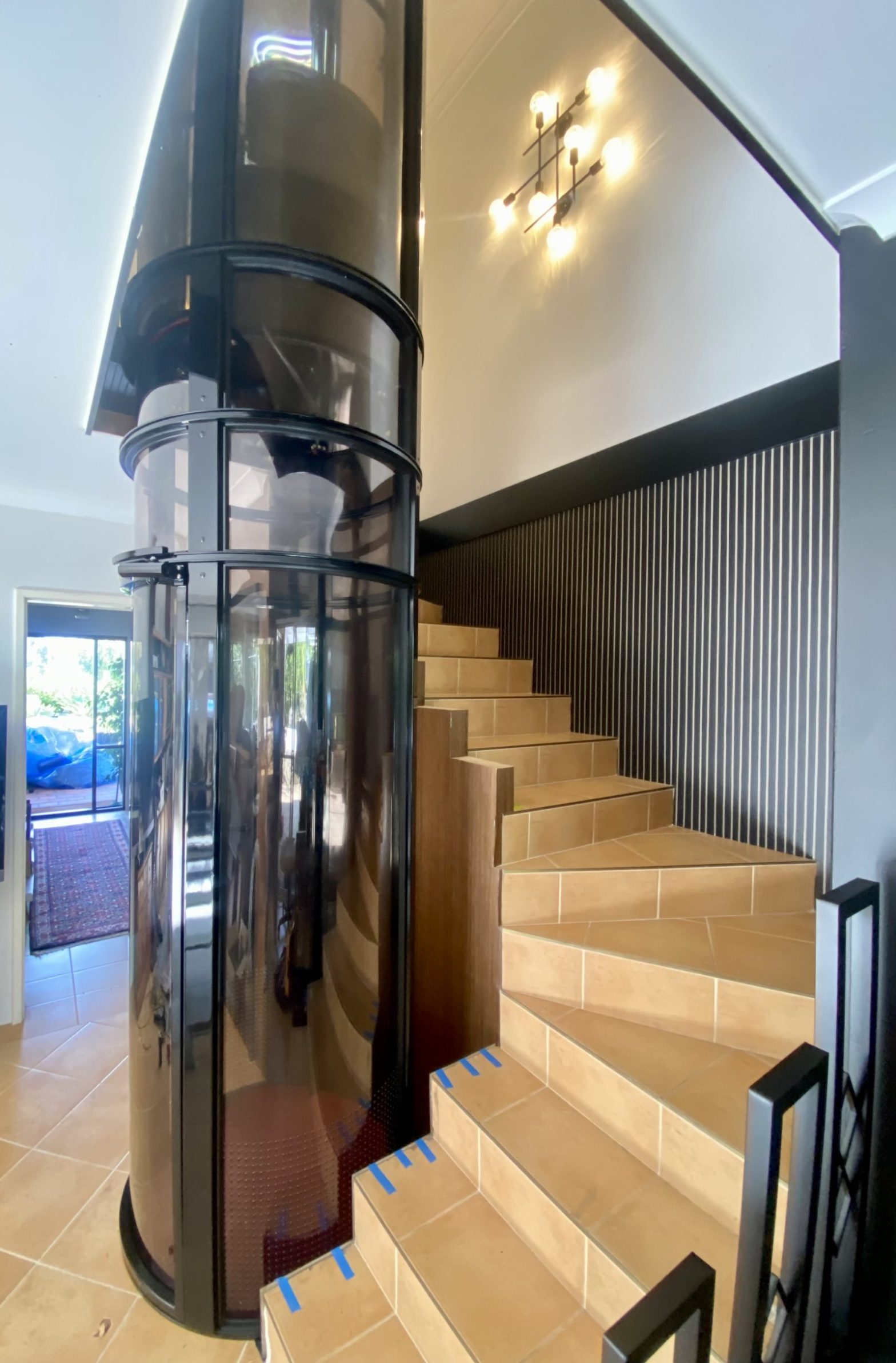
A stair lift isn’t always the right answer for stair safety for elderly parents. Clear steps, good lighting and secure handrails, ideally on both sides, can reduce everyday hazards. A stair lift may suit a parent whose stair use has become slow, tentative or avoided. The right approach depends on what makes the stairs difficult and whether your parent can use a lift comfortably.
It’s understandable to want to help your parent move around home with greater confidence without rushing into a major change. This guide covers practical ways to make stairs safer, from improving visibility and removing trip hazards to positioning handrails for support. It also explains when a stair lift may be worth considering and when changes to routines or living arrangements may be more suitable. You’ll have a clearer basis for discussing options with your parent and choosing a considered next step.
Key Takeaways
- Improve visibility with brighter stairwell lighting and clearly marked step edges, while keeping the walking surface even and secure.
- Choose handrails that are easy to grip, firmly fixed and continuous, so your parent can hold support throughout the climb.
- Keep shoes, cords, laundry and other loose items off the stairs to reduce avoidable trip hazards.
- Notice whether stair use is becoming slow, hesitant or avoided; a stair lift may help, but comfort using the equipment and the home’s layout matter.
1. Lighting and clear walking space
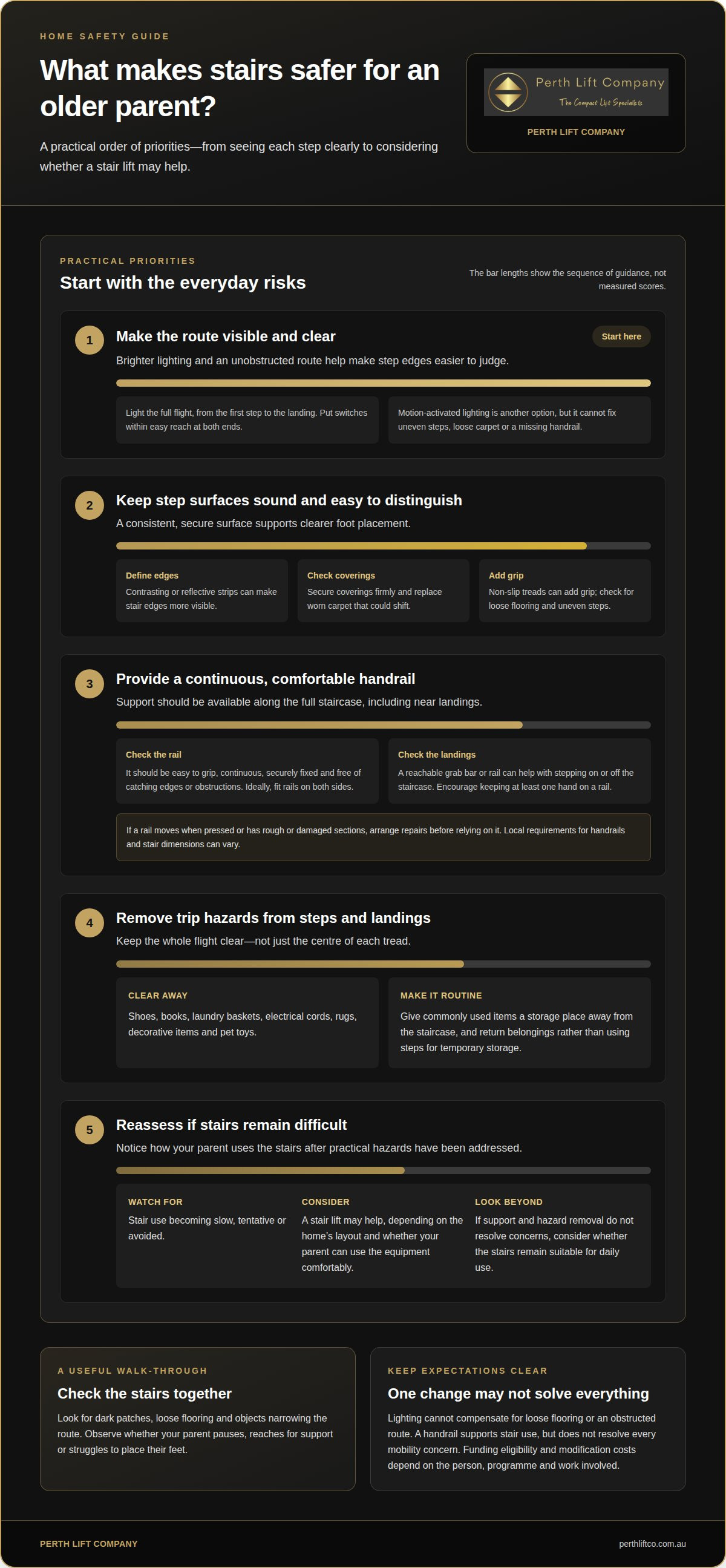
For stair safety for elderly parents, start with good visibility and an unobstructed route. Poor lighting can make step edges harder to judge, particularly when vision changes or the stairwell is dim. Replace weak bulbs with brighter lighting and make sure the whole flight is visible from the first step to the landing. A clear view can support steadier movement and greater confidence.
Place light switches where they’re easy to reach at both the top and bottom of the stairs. This lets your parent switch on the stairwell light before stepping onto the first tread, rather than reaching in the dark. Motion-activated lighting is another option for illuminating the route as someone approaches. It improves visibility, but won’t fix uneven steps, loose carpet or a missing handrail.
Make each step easier to distinguish. Contrasting strips or paint along stair edges can help define where one tread ends and the next begins. Reflective strips may also make edges more visible in low light. Check that coverings are firmly attached and replace worn carpet that could shift underfoot. Non-slip treads can add grip, while a consistent, uncluttered surface helps your parent see where to place each foot.
There isn’t one Australia-wide answer on aged-care funding or subsidies. Eligibility for a stair lift or home modification depends on the relevant programme and the person’s circumstances, so don’t assume funding will be available.
The cost of stair handrails, non-slip treads and stair lighting depends on the case and is given after a quote request. Stair length, surface condition, materials and installation complexity all affect the work involved.
For a practical review, walk the stairs with your parent and check the lighting, step surfaces and clutter together. Note dark patches, loose flooring and objects narrowing the route. Motion-activated lighting can improve visibility, but clear walking space and sound step surfaces remain essential for safer movement and greater independence.
2. Handrail grip, continuity and placement
A handrail should offer steady support along the full length of a staircase. For older adults with changing mobility, a rail that stops before the landing can leave a gap just where balance may shift. Ideally, fit handrails on both sides so support is available whichever side feels comfortable. Keep each rail continuous from top to bottom, securely attached and clear of obstructions.
Grip matters as much as position. A rail should feel comfortable to hold and let the hand move along it without catching on sharp edges, brackets or decorative fittings. Check its full length, including joins and the ends near each landing. If a handrail moves when pressed or has rough or damaged sections, it may not provide dependable support. Arrange repairs before relying on it.
Landings need attention too. An additional grab bar or handrail near a landing can help someone steady themselves while stepping on or off the staircase. Place it where the person can reach it naturally, without twisting or stretching. Encourage your parent to keep at least one hand on a rail while using the stairs, rather than carrying items that occupy both hands.
Australian residential building requirements for handrails and stair dimensions can vary by location and the work involved. There isn’t one generic online measurement to apply to every home. Structural stair work needs to follow the requirements that apply locally.
Walk the staircase with your parent and consider how they use each section. Notice whether they can grasp the rail comfortably, maintain contact through turns and landings, and move without reaching around obstacles. A handrail supports stair use, but it doesn’t resolve every mobility concern. If your parent can’t hold the rail reliably or remains fearful despite improvements, consider whether the stairs are still suitable for daily use. This practical assessment can help distinguish a rail-placement problem from a broader need for support.
3. What should be removed from stairs?
Remove anything that narrows the route or could shift underfoot. Shoes, books, laundry baskets, electrical cords, rugs, decorative items and pet toys can all become tripping hazards. Even one shoe near a step can be hard to see, especially if it blends into the stair surface. Keep the full flight and both landings clear, not just the centre of each tread.
Give commonly used items a storage place away from the staircase. Put shoes in a rack near the entry, take laundry baskets to a room rather than leaving them on a landing, and put pet toys in a container after play. Make returning belongings to their places part of the household routine instead of using the stairs as temporary storage.
- Move loose rugs and decorative objects away from steps and landings.
- Keep electrical cords out of the stair route, including cords from nearby lamps.
- Clear books, shoes, laundry and pet toys as soon as they’re left on a step.
Look beyond loose objects when clearing the stairs. Check whether carpet edges lift, flooring shifts or a tread feels uneven underfoot. These surfaces can catch a foot or affect balance, even when the stairs look tidy. Good visibility helps your parent notice each step, but it can’t compensate for loose flooring or an obstructed route.
Ask your parent to walk the cleared stairs at their usual pace while you observe from a safe position. Notice whether they pause, reach for support or struggle to place their feet. Reduced strength or growing difficulty can make everyday obstacles harder to manage. If near-falls continue after hazards are removed, a home-safety assessment can help identify whether further changes are needed. Keeping stairs clear is a practical first step, not a complete solution for every mobility concern.
4. When to consider a stair lift for an older parent
A stair lift may be worth considering when your parent’s daily stair use becomes tentative, slow or avoided. Reduced leg strength, arthritis, joint pain, vision changes, poor balance, dizziness, medication effects or recovery from illness can all make stairs harder to manage. Look for patterns, such as pausing at the first step, gripping the rail tightly or choosing to stay on one floor.
A lift lets someone travel between floors while seated, but it isn’t automatically the right solution. Consider whether your parent feels comfortable using mechanical equipment and understands its controls. A narrow or steep staircase may also affect suitability. If they’re anxious about the equipment or can’t use it confidently, another plan may better support their independence.
In Australia, occupational therapists can assess how a person’s abilities and home layout affect safe movement. Their assessment can identify practical changes that support safety and independence, including whether continued stair use is appropriate.
Repeated falls, near-falls, dizziness, severe fatigue or fear of stairs signal a wider concern. Better lighting, clear space and handrails may not address the underlying difficulty. Consider whether daily activities could move to one level, including a downstairs bedroom with a proper bed, good lighting and clear walking space. Easy access to a downstairs toilet can also reduce trips on the stairs, particularly at night.
Talk with your parent about comfort, safety and staying at home before making changes. Ask what feels difficult, when they avoid the stairs and which rooms they need every day. This can help you work out whether a stair lift fits their needs or whether a single-level routine is more practical. An occupational therapist’s home assessment can bring together mobility, confidence and the layout of the house. Repeated falls or an inability to use the handrail safely deserve prompt attention. Don’t rely on a lift or minor stair changes alone.
Perth Lift Company: Delta Platform Stair Lifts
Perth Lift Company supplies and installs Delta Platform Stair Lifts for families considering a lift as part of a safer home plan. If your parent is avoiding stairs or struggling to move between floors, this option may be worth discussing alongside the home’s layout and your parent’s ability to use lift equipment comfortably.
Choosing a solution starts with understanding the access challenge and the household’s priorities. A stair lift may not suit every person or staircase, so weigh it against other practical changes, such as moving daily activities to one level. You can explore the Delta Platform Stair Lifts to see the option available.
Contact Perth Lift Company to discuss whether a Delta Platform Stair Lift may suit your home and your parent’s needs.
Plan the next step around your parent
A useful next step is to discuss what your aging parent wants to keep doing at home, then consider which changes support that goal. Their comfort, daily routines and the home’s layout can help guide a decision without making the stairs the only focus.
When prioritising stair safety for elderly parents, the right solution should fit the person as well as the property. Perth Lift Company offers Delta Platform Stair Lifts, and also offers SWIFT Pro Lifts, SWIFT Lite Lifts and Pneumatic Vacuum Elevators (PVE 30, 37, 52) for different access needs.
Share your family’s access needs with Perth Lift Company to explore a suitable next step. Contact Perth Lift Company today to start a considered conversation and move towards a home that better supports your parent’s independence.
Frequently Asked Questions
Is a Stair Lift Always the Right Answer?
No. A stair lift may help someone who finds walking upstairs difficult, but it won’t suit every person or home. Consider whether your parent feels comfortable using mechanical equipment and can operate its controls. The staircase’s shape and available space matter too. If your parent avoids the stairs because of dizziness or repeated falls, consider the wider home-safety picture rather than treating a lift as the only solution.
Are open-riser or floating staircases a problem in a multi-generational home?
They can be a concern if gaps between treads make it harder for someone to judge each step or place their feet confidently. Different household members may also use the stairs at different speeds and with varying mobility. Before changing an open-riser staircase, consider visibility, handrail support and the needs of everyone at home. Structural alterations should follow the building requirements that apply locally.
How can I make stairs easier to see?
Improve visibility along the whole route, including the approach and landings. For example, check whether a hallway light leaves the first step in shadow or whether a bright fitting creates glare on a polished tread. Keep lighting consistent between adjoining areas so the eyes can adjust. Your parent should have their glasses available before using the stairs.
How do I modify stairs for an elderly person?
Start by identifying what makes the stairs difficult for your parent, such as pain, reduced balance or trouble judging step edges. Then prioritise changes that address that specific barrier, rather than adding features without a clear purpose. A home-safety assessment can consider the staircase alongside daily routines, such as carrying items between floors or needing the toilet overnight.
Should I add safety features during the renovation or retrofit them later when someone needs them?
Planning during a renovation can make it easier to consider future access needs alongside the home’s layout and structural work. That doesn’t mean every possible feature needs to be installed immediately. Discuss likely changes with the renovation team and consider how the household might use the stairs over time. If needs change later, reassess the home and prioritise modifications around current abilities.
What should be removed from stairs?
Remove anything that could catch a foot, shift underfoot or block a clear route. This includes shoes, books, laundry baskets, electrical cords, loose rugs, decorations and pet toys. Don’t leave parcels or shopping bags temporarily on a landing either. Give commonly used belongings a storage spot away from the stairs, so household members can put them away instead of creating new obstacles.