
Choosing to sell your beloved family home simply because the stairs have become a burden might be the most expensive financial mistake you make this year. With Perth’s median house price climbing toward the million-dollar mark, the frictional costs of stamp duty and real estate fees often far outweigh the actual home lift price of a premium installation. It’s understandable if you feel frustrated by the lack of transparent information online. Most homeowners we speak with are tired of chasing vague quotes that don’t account for the structural realities of Western Australia’s unique double-brick construction.
This guide provides a clear, professional roadmap to help you understand the total investment required for a residential lift in 2026. We’ll explore how different technology choices, such as the space-saving Pneumatic Vacuum Elevators (PVE) or the future-ready SWIFT Pro, influence your final budget. By the end of this article, you’ll have the confidence to choose a solution that doesn’t just improve your daily mobility but actively enhances your home’s long-term market value.
Key Takeaways
- Understand how your choice of drive system—from vacuum to screw-drive—serves as the main anchor for the total home lift price and determines the extent of required structural modifications.
- Learn why selecting a pitless, shaftless design like a Pneumatic Vacuum Elevator can save thousands in building costs when retrofitting into Perth’s traditional double-brick homes.
- Gain clarity on long-term operational expenses, including annual service intervals and energy consumption, to ensure your investment remains sustainable for years to come.
- Discover how to match the right technology to your home’s unique layout, such as using the ultra-compact PVE 30 to solve mobility challenges in tight stairwells.
Breaking Down the Home Lift Price: What Determines the Base Cost?
Determining the base home lift price begins with categorising solutions into three tiers: mobility-focused stairlifts, platform lifts, and premium elevators. Each serves a different purpose, from simple accessibility to full-scale architectural integration that enhances your property’s market appeal. Understanding these distinctions is the first step in planning a successful home modification.
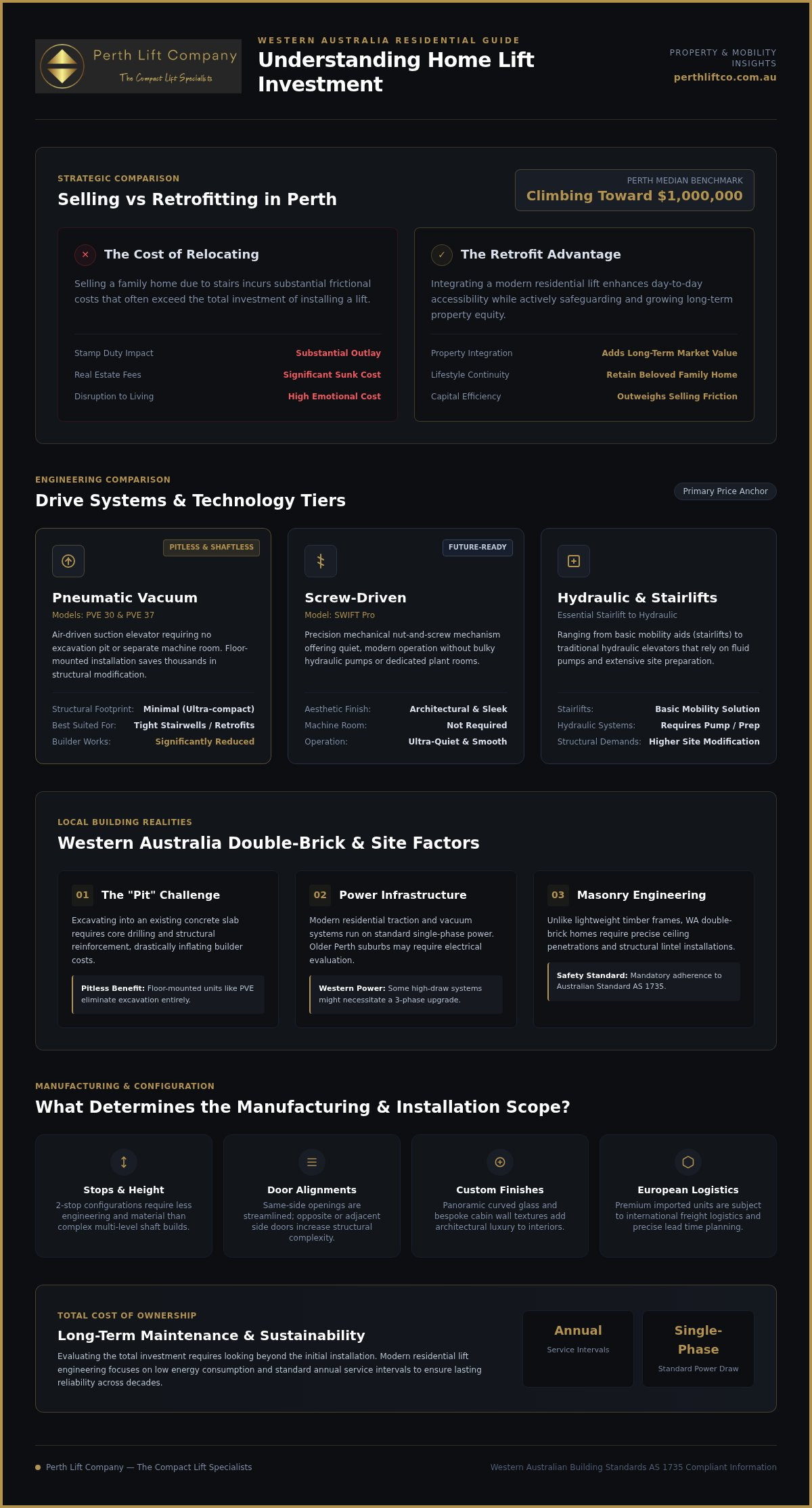
The drive system is the primary price anchor for any project. You’ll encounter several types of home lifts and drive mechanisms, including hydraulic, screw-driven, and pneumatic vacuum systems. Hydraulic setups often require more site preparation, whereas vacuum models might have higher equipment costs but simpler structural needs, making them ideal for specific Perth floor plans.
Travel height and the number of stops also dictate the manufacturing budget. A two-stop lift is simpler than a multi-level installation that requires more engineering and materials. Customisations like panoramic glass or bespoke cabin textures further increase the base cost but offer a truly luxury feel that complements high-end interiors.
Technology Tiers: From Stairlifts to SWIFT
The gap between basic aids and high-end lifts is significant. While an essential stairlift provides basic mobility, modern options like the SWIFT Pro use screw-driven technology for a quieter, “future-ready” experience. This removes the need for bulky hydraulic pumps, allowing for a sleeker integration into modern Perth homes without requiring a dedicated machine room.
Manufacturing vs. Installation Costs
It’s vital to distinguish between the lift’s purchase price and the total home lift price including installation. Many premium units are imported from Europe, meaning lead times and global logistics can affect the final quote. Additionally, your landing configurations, meaning whether the doors open on the same side or opposite sides at different levels, will impact the technical complexity and structural requirements of the build. For a thorough breakdown of how pneumatic, traction, and hydraulic drive mechanisms compare across new builds and retrofits, our comprehensive guide on the cost of home elevators and lifts outlines every critical factor that determines your true investment.
Key Factors Influencing the Total Investment in Western Australia
Perth’s architectural landscape, dominated by double-brick masonry, presents unique challenges that directly influence the total home lift price. Unlike lightweight timber frames common in the eastern states, retrofitting a lift in WA often involves significant structural engineering. These local factors mean that your choice of technology must align with your home’s existing skeleton to avoid unnecessary construction expenses.
The “Pit” Problem: Excavation vs. Floor-Mounted Lifts
Traditional elevators often require a “pit” excavated into the ground floor. If your home sits on a thick concrete slab, this involves core drilling and structural reinforcement, which adds substantial builder costs to the project. Choosing a pitless model like the Pneumatic Vacuum Elevator (PVE 37) bypasses these works entirely; they are floor-mounted and don’t require a machine room or deep excavation, saving both space and budget during the installation phase.
Compliance with AS 1735 standards is mandatory for residential safety. Additionally, older Perth suburbs may require electrical upgrades. While modern traction lifts run on single-phase power, some systems might necessitate a 3-phase upgrade via Western Power. It’s essential to consult Western Australian building and renovation regulations to ensure your project meets all legal and safety criteria before commencement.
Site Access and Internal Modification
Integrating a lift into an established two-storey home requires careful logistics. This isn’t just about the equipment; it’s about how the lift enters the building. Collaborating with local builders ensures that ceiling penetrations and lintel installations are handled with precision. For projects still in the design phase, following a structured home lift planning for builders checklist helps resolve key structural and spatial decisions before construction progresses, reducing the risk of costly site changes. This methodical approach reduces the risk of unexpected blowouts in your total home lift price. If you’re unsure where a lift might fit, exploring our range of space-saving models is a great starting point for your planning.
Hidden Costs and Long-Term Value: Maintenance and ROI
Beyond the initial equipment purchase, understanding the total home lift price requires a look at the total cost of ownership. Investing in a residential elevator is a long-term commitment. It’s essential to consider how maintenance and energy efficiency impact your household budget over the next decade. For a comprehensive breakdown of what to expect, our detailed guide on residential elevator cost in Perth covers everything from site preparation and council permits to long-term maintenance expenses.
Running Costs and Energy Efficiency
Modern systems are surprisingly efficient. For instance, SWIFT lifts feature advanced Eco-mode settings that minimise standby power consumption when the unit isn’t in use. A vacuum lift draws power only during its ascent and uses zero energy during descent by utilising gravity and air pressure. This makes the daily operational cost comparable to running a standard kitchen appliance.
The Investment Case for Future-Proofing
A well-integrated lift significantly boosts property value, particularly in premium Perth suburbs like Cottesloe or Dalkeith. Buyers in these areas often prioritise ageing-in-place capabilities, making a multi-storey home with a lift far more desirable. Beyond resale value, the savings are practical. Staying in your family home often costs less than the transaction fees of downsizing or the ongoing expenses of assisted living.
Compliance is key to maintaining this value. Navigating the Western Australia building approvals process correctly ensures your lift is legally certified; this is vital for future home inspections. For those with specific health needs, NDIS or My Aged Care funding may offer pathways to offset the home lift price. To see how a lift fits your long-term plans, explore our range of future-ready lift solutions.
Annual service intervals are standard in WA to ensure safety and longevity. These checks typically involve lubricating moving parts and testing safety sensors. By choosing a reliable local partner, you ensure that replacement parts are readily available, preventing costly downtime.
Selecting the Right Solution for Your Perth Property
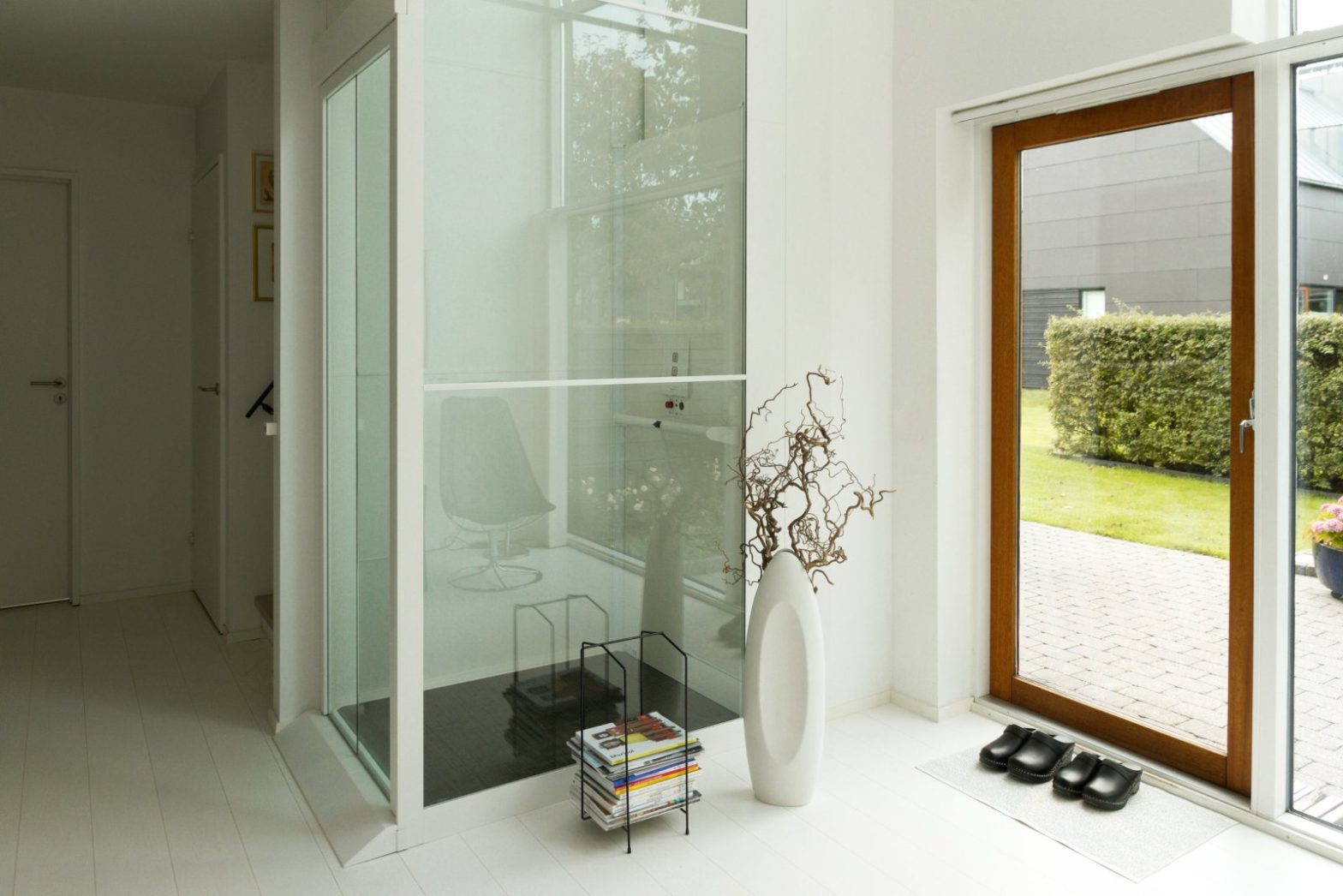
Selecting the right lift requires balancing your home’s architectural style with your family’s daily needs. While a sleek, glass-walled elevator suits a modern riverside build, heritage properties in older Perth suburbs often benefit from more discreet, space-saving technology. The total home lift price is ultimately an investment in your property’s functionality, so choosing a system that complements your interior design is vital for long-term satisfaction.
For homes with tight stairwells or limited floor space, the PVE 30 offers a compact footprint without sacrificing style. Conversely, larger households or families with high-traffic requirements should consider the SWIFT Pro. It provides the durability and speed needed for frequent use across multiple levels. We always recommend visiting a local Perth showroom to experience the ride quality and quiet operation of these systems first-hand before making a final decision.
Space vs. Capacity: Finding the Balance
Choosing between models often comes down to specific mobility goals and the physical footprint available. The PVE 37 accommodates two passengers comfortably, while the larger PVE 52 is specifically designed for full wheelchair access. If your primary focus is functional accessibility rather than a high-end passenger experience, a Sigma platform lift might be the more practical and cost-effective choice for your specific layout.
Next Steps: Getting an Accurate Quote in WA
To receive a realistic estimate, it’s helpful to provide your builder’s plans or detailed photos of your existing stairwell. This allows us to account for Western Power requirements and structural constraints unique to WA’s double-brick homes. For a tailored site assessment and a transparent breakdown of your home lift price, contact Perth Lift Company to speak with our local experts today.
Future-Proofing Your Perth Home with Confidence
Investing in a residential elevator is about more than just accessibility; it’s a strategic move to preserve your lifestyle and property value in a competitive market. By understanding the factors that dictate the total home lift price, from structural modifications in double-brick walls to the energy efficiency of vacuum technology, you can make an informed decision that suits your budget and your home’s unique architecture.
As a WA-owned and operated specialist, we take pride in being the official regional agent for world-leading technology like PVE and SWIFT. Our team ensures every installation meets rigorous AS 1735 safety standards, providing you with a reliable solution that stands the test of time. We are here to guide you through every technical requirement and building approval with absolute transparency. Ready to take the next step? Request a Personalised Quote for Your Perth Home Lift and let us help you create a home that is ready for whatever the future brings. Your long-term comfort is our priority.
Frequently Asked Questions
How much does it cost to install a lift in an existing two-storey house in Perth?
Installing a lift in an existing Perth home involves both the equipment cost and the builder’s civil works. The final home lift price is determined by your choice of technology, such as a pitless PVE model or a screw-driven SWIFT Pro. Retrofitting into double-brick construction requires specialist structural engineering to ensure the shaft is safe and compliant. We recommend a site assessment to determine the exact requirements for your specific floor plan.
Do home lifts add value to a property in Western Australia?
Yes, residential elevators significantly enhance the market appeal and resale value of multi-storey homes across Western Australia. In prestige suburbs like South Perth or Applecross, a high-quality installation expands your pool of potential buyers to include affluent retirees and multi-generational families. By future-proofing your residence, you ensure it remains functional for a wider demographic, which often results in a faster sale and a higher final price point when you eventually list.
What is the cheapest type of home lift to install?
Stairlifts and vertical platform lifts generally represent the most budget-friendly entry points for home accessibility. While these solutions provide essential mobility, they differ in function and aesthetics compared to fully enclosed residential elevators. For homeowners seeking a balance between cost and integrated design, shaftless models can reduce the total home lift price by eliminating the need for extensive structural renovations, pit excavation, or dedicated machine rooms required by traditional hydraulic systems.
Are there ongoing maintenance costs for residential elevators?
Ongoing costs for residential elevators are relatively modest and primarily consist of annual safety inspections and electricity usage. Modern traction and vacuum systems are designed for high energy efficiency, often drawing no more power than a standard kitchen appliance. Regular preventative maintenance by a local specialist ensures your investment remains compliant with AS 1735 standards. This proactive approach helps avoid larger repair bills by identifying wear and tear early in its lifecycle.
Can I install a home lift if I have limited space in my Perth home?
Limited space is no longer a barrier to installing a high-quality lift in your Perth residence. Compact models like the PVE 30 are specifically designed to fit into tight stairwells or small corners with a minimal footprint. Because these units are pitless and don’t require a separate machine room, they can be integrated into existing layouts where traditional elevators wouldn’t fit. Our team specialises in finding tailored solutions for even the most challenging spaces.
Does a residential lift require a 3-phase power connection?
Most modern residential lifts, including the SWIFT Pro and PVE ranges, operate efficiently on standard 240V single-phase power connections. This eliminates the need for expensive electrical upgrades in many Perth homes. However, some older hydraulic systems or heavy-duty commercial-grade units might still require a 3-phase power upgrade. It’s important to check the specific Western Power requirements for your suburb, especially if you live in an area with older electrical infrastructure.