
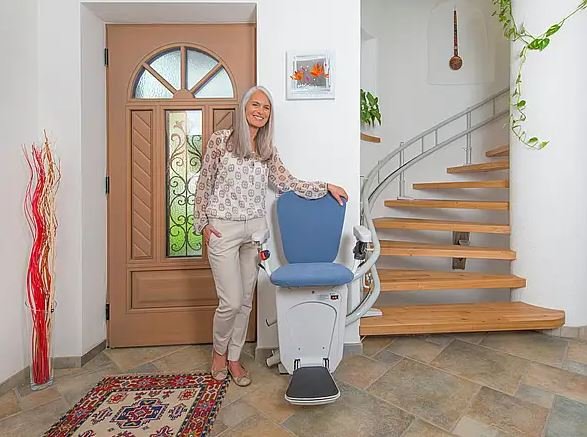
What if the best mobility solution for your home isn’t the one you first had in mind? A stairlift may help with a staircase, while a platform lift or residential lift may better address a different access barrier. Choosing mobility solutions for homes WA starts with how you move through your home each day, not simply which product catches your eye.
It’s understandable to wonder whether a lift will mean major changes to your home, or how to plan for mobility needs that may change over time. The layout, the access point you need to manage and your daily routines all help shape a practical choice. This guide compares chair stairlifts, platform lifts and residential lifts, including the situations each is designed to suit. You’ll also find out which details about your home and access needs can help you prepare for a project discussion with Perth Lift Company.
Key Takeaways
- Start by identifying the access barrier, whether it’s a staircase, a level change or movement between floors.
- Compare mobility solutions for homes WA by considering the person’s needs alongside the property layout and daily routines.
- Note where access is difficult, who will use the solution and which destinations need to remain accessible.
- Bring these details into a project discussion with Perth Lift Company to help shape a tailored approach.
Mobility solutions for homes in WA: start with the access barrier
When stairs, a change in level or moving between floors becomes difficult, everyday routes through the home can take more effort. Start by identifying exactly where access is challenging. A staircase presents a different problem from a raised entry or the need to reach bedrooms on another floor. The equipment to consider depends on both the person’s movement needs and the property layout.
Home mobility solutions are equipment designed to support access and everyday movement within or around a home. Options include stairlifts that travel along a staircase, platform lifts that help with a level change, and residential lifts for moving between floors. These are access solutions, not care services. For broader context on equipment categories, see this overview of types of mobility aids.
Which everyday access barriers should shape the search?
Look at the route that causes difficulty. Is it a staircase, a short rise at the front entry or the journey between floors? Consider the whole path from the street or driveway, through the entrance and towards the rooms used most often. Describing the specific barrier helps narrow the options without making assumptions about someone’s age, diagnosis or use of a mobility aid.
Why plan for both current and future routines?
Think about who will use the equipment, how often they travel through the home and which destinations matter in daily life. A solution for a regular route between living areas may serve a different purpose from one focused on the entry. Planning for ageing in place means considering how the home can remain accessible as routines or needs change. Perth Lift Company’s home lifts and stairlift options provide categories to explore as part of that early planning.
Access needs and home layout belong in the same conversation. The solution needs to suit both the person’s routine and the routes the property allows.
Compare home mobility solutions for WA houses
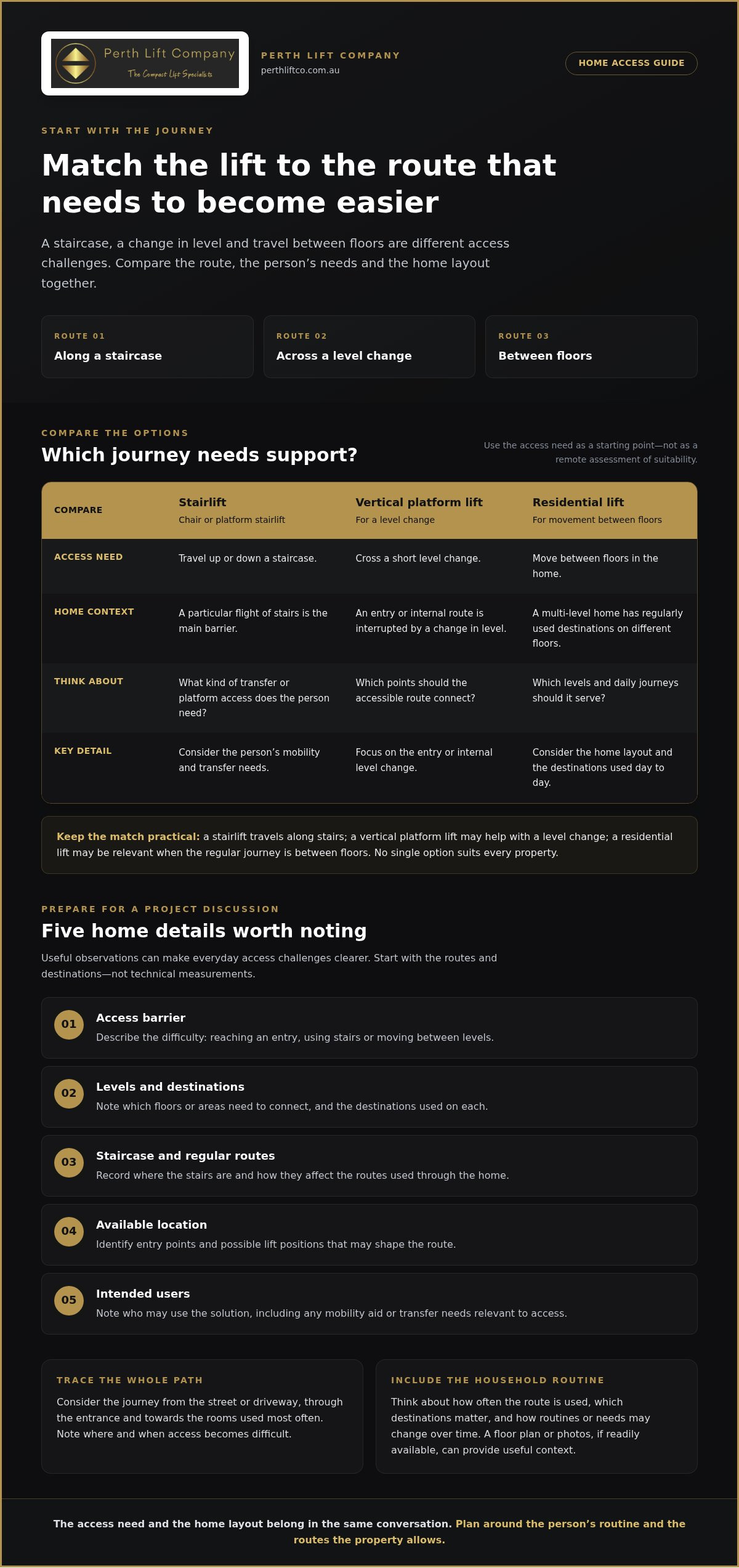
Comparing mobility solutions for homes WA means matching the equipment to the journey that needs to become easier. A short level change, a flight of stairs and regular movement between floors are different access challenges. Consider the household’s needs alongside the layout of your Perth home.
| Access need | Solution type | Home context | Planning question |
|---|---|---|---|
| Travel along a staircase | Chair stairlift or platform stairlift | A home where a particular flight of stairs is the main barrier | What kind of transfer or platform access does the person need? |
| Cross a short level change | Vertical platform lift | An entry or internal route interrupted by a change in level | Which points should the accessible route connect? |
| Move between floors | Residential lift | A multi-level home with regularly used destinations on different floors | Which levels and daily journeys should it serve? |
When might a residential lift suit the household?
A residential lift is worth considering when moving between floors is the main access challenge. The home’s layout and household needs help determine which lift category to explore, as no single option suits every property. Perth Lift Company supplies and installs a diverse range of quality residential lifts tailored to local properties. Browse the residential lift product range while considering which routes and destinations matter most in your home.
When might a platform lift or stairlift fit better?
A vertical platform lift may help with a level change, while a stairlift travels along a staircase. The person’s mobility and transfer needs are important when comparing them. If the challenge is getting over a rise, focus on platform lift options. If it is travelling up or down stairs, consider a stairlift. If the regular journey is between floors, a residential lift may be more relevant.
These categories are a starting point, not a remote assessment of suitability. For mobility solutions for homes WA, consider the access need and the property together so a project discussion can focus on the household’s actual routes.
Assess your WA home before choosing a mobility solution
Good planning for mobility solutions for homes WA starts with useful observations, not technical measurements. Record the routes that are difficult and the destinations the household needs to reach. These notes help turn everyday experiences into a clearer project discussion.
- Access barrier: Describe the difficulty, such as reaching an entry, using stairs or moving between levels.
- Levels: Note which floors or areas need to connect and the destinations used on each.
- Staircase: Record where the stairs are and how they affect regular routes through the home.
- Available location: Identify entry points and possible lift positions that may shape the route.
- Intended users: Note who may use the solution and any mobility aid or transfer needs relevant to access.
What home details are useful to record?
Trace the usual journeys, from the driveway or entry to the rooms people use throughout the day. Note where and when access becomes difficult, and which routes are used most often. Include whether the project involves an existing home or a planned build. A floor plan or photos, if readily available, can provide useful context. Perth Lift Company’s lift and stairlift options can help you identify categories to discuss while keeping the focus on your home’s layout.
How should household needs guide the comparison?
Consider who will use the solution, how they move through the home and whether transfers or mobility aids affect access. Include plans for ageing in place and any likely changes to daily routines. For mobility solutions for homes WA, household needs matter just as much as the property itself. A project discussion can consider both when exploring the options.
Before discussing mobility solutions for homes WA, note the access challenge, key routes and destinations, possible locations, intended users and future household priorities. This preparation gives the project conversation a clear starting point.
Plan a tailored home mobility project with a WA lift specialist
Comparisons can narrow the possibilities, but a guide can’t account for every feature of an individual home. Perth Lift Company works with homeowners, builders and architects to tailor home access projects, considering the access barrier, property layout and household priorities. This takes the discussion beyond a general product category towards options shaped around how the home is used.
What to bring to an initial project discussion
A short summary is a useful starting point. Note which route is difficult, which floors or levels need to connect and who will use the solution. Explain whether the project concerns an existing home or a planned build. You can also describe household priorities, such as reaching everyday living spaces or maintaining access to an entry. If readily available, bring a floor plan, layout notes or photos of the relevant areas. These details add context without requiring you to choose equipment in advance.
Turn the comparison into a practical next step
Use your notes to identify which categories may be relevant: a stairlift for travel along stairs, a platform lift for a level change, or a residential lift when movement between floors is the main challenge. These are useful starting points, not a remote judgement of what will suit the property. A tailored discussion can take account of the home, intended users and changing household priorities, including plans for ageing in place.
For mobility solutions for homes WA, start with the access challenge and the routes that matter most. Perth Lift Company can work with you and, where relevant, your builder or architect to consider the project in context. You don’t need every detail resolved before starting the conversation.
Talk through your home mobility needs with Perth Lift Company and take a considered next step towards a more accessible home.
Make your next step a considered one
A home access project doesn’t need to begin with a decision about equipment. It can begin with a conversation about how you want your home to work for you, now and as your routines change. Keeping that perspective helps you focus on practical access rather than choosing a product before considering the property and household needs.
For mobility solutions for homes WA, Perth Lift Company brings local knowledge as a locally owned and operated specialist serving Perth and Western Australia. The team works with homeowners, builders and architects to shape residential mobility projects around the home and the people who use it. Notes about access needs and household priorities can help make the first discussion clearer and more constructive.
You can take the next step at your own pace. Talk through your home mobility needs with Perth Lift Company and explore a considered way forward for your home. Start by describing what matters to you and how you use your home.
Frequently Asked Questions
Can a mobility lift be installed in an existing home in WA?
Yes, an existing home may be suitable for a mobility lift, depending on its layout and the access requirements. In Perth, a project discussion can consider how the lift would connect the relevant areas and fit within the home. Share any available floor plans or photos, and note which rooms need to remain easy to reach. A tailored project discussion can help clarify the options for your property.
Is a stairlift or a platform lift better for wheelchair access?
A platform lift is generally the category to explore if the person needs to remain in their wheelchair, while a chair stairlift requires transferring onto its seat. The route matters too: a vertical platform lift addresses a level change, while a platform stairlift travels along stairs. The person’s transfer needs and the home’s configuration help determine which type is appropriate.
Does the NDIS fund home mobility lifts in Western Australia?
NDIS funding may be available for a home mobility lift if the participant is eligible and the modification meets the scheme’s requirements. A lift project may be treated as a complex home modification, which can involve an occupational therapist’s assessment and NDIS approval before work begins. Funding isn’t automatic, so participants should review their plan and the current NDIS process. Perth Lift Company can discuss the lift options relevant to a proposed project.
Can a home mobility solution support ageing in place?
Yes. A home mobility solution can help someone continue using important areas of their home as their mobility or daily routine changes. For example, access between living spaces may matter more over time than occasional access to a rarely used room. Planning ahead can help Perth households consider how a solution may support independence in the longer term, while keeping the specific home and its occupants at the centre of the decision.