
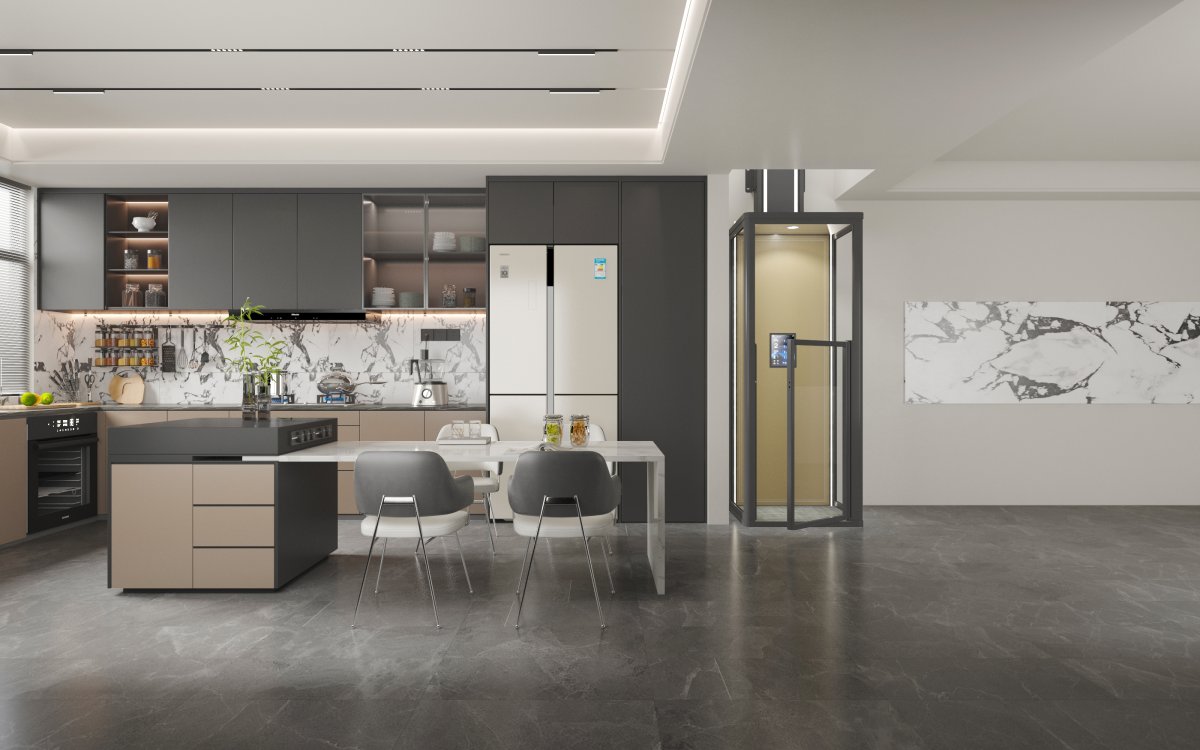
What makes a home lift practical to maintain over time? If you’re searching for “low maintenance home lifts perth”, you’re likely looking for predictable upkeep that fits your household routine. Low maintenance doesn’t mean maintenance-free: the lift’s design, how it suits your home and a clear care plan all shape ownership.
Comparing systems can be difficult when servicing information varies between lift types. This guide explains what routine upkeep can involve and how to compare screw-driven, hydraulic, traction and pneumatic vacuum lifts using practical maintenance considerations. No single option suits every home.
You’ll also learn how installation conditions and long-term access needs affect your decision, and what to consider when looking at options such as SWIFT Lifts. Perth Lift Company works with homeowners, builders and architects to plan residential lift projects around the home and its access needs.
Key Takeaways
- Think of low maintenance as planned, manageable care rather than a lift that never needs servicing.
- Compare low maintenance home lifts perth by considering system design, access for inspection and the documentation that supports ongoing care.
- Factor in your home’s layout and installation environment, as these can shape how practical lift upkeep is over time.
- Map your access needs, assess your home and compare suitable systems with Perth Lift Company to plan an option around your household and future needs.
What does a low-maintenance home lift mean for a Perth household?
For a household planning to stay in its home long term, dependable access matters as much as the lift’s fit and appearance. A practical maintenance plan makes ownership easier to plan for and recognises that mechanical and electrical equipment needs routine care and occasional professional attention.
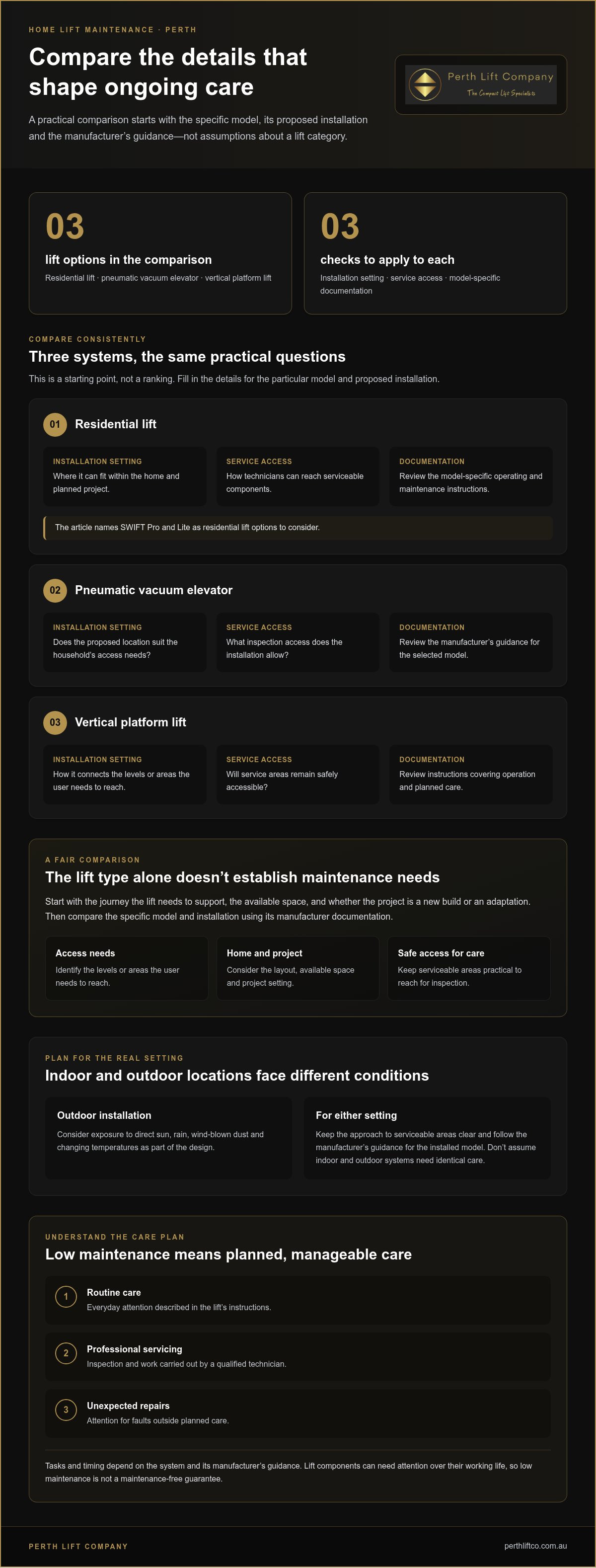
Low-maintenance lift ownership means understanding what care is needed, planning for it and making that care straightforward to carry out. It isn’t a promise that servicing will never be required. Routine care means the everyday attention described in the lift’s instructions. Professional servicing involves inspection and work by a qualified technician, while unexpected repairs address faults outside planned care. Tasks and timing depend on the system and its manufacturer’s guidance.
Does low maintenance mean maintenance-free?
No. Lift components can need attention over their working life, and assumptions based on another lift may not apply to yours. Follow the manufacturer’s documentation for the specific system rather than relying on generic claims or a schedule intended for a different design. The Home lift Wikipedia article offers a general overview of home lift types, but model-specific instructions are the practical reference for ownership.
What can make lift upkeep feel demanding?
Upkeep can be harder to organise if the lift is difficult to access for inspection or if its design and installation setting make servicing less convenient. Plan these details alongside the lift itself, rather than treating maintenance as an afterthought. Perth Lift Company works with homeowners, builders and architects on residential lift projects. Options such as SWIFT residential lifts can be considered in the context of the home and its access needs.
A manageable care plan is different from a maintenance-free guarantee. For a clearer comparison, note the manufacturer’s care instructions, how service access is arranged and who will coordinate professional attention. This gives your household a realistic picture of ongoing ownership before choosing a system.
Which home lift factors influence ongoing maintenance?
Upkeep depends on more than the lift’s broad category. The parts that need inspection, how easily a technician can reach them and the conditions around the installation all affect how care is planned. Maintenance needs depend on the model, installation and manufacturer guidance. The system’s documentation and how it fits into the home matter as much as general claims about lift technology.
Which design details should homeowners consider?
Check where serviceable components are located and whether there is safe, practical access to them. If access means moving stored items or working in a cramped space, inspections may be harder to organise. Clear operating and maintenance documentation helps household members understand normal use and gives technicians relevant model-specific information. Discussing these details during planning can prevent avoidable access issues later.
How can Perth’s setting affect the maintenance plan?
An indoor lift and one installed outdoors face different surroundings. An external installation may be exposed to direct sun, rain, wind-blown dust and changing temperatures, so its location and protection should be considered as part of the design. Keep the approach to serviceable areas clear, and follow the manufacturer’s guidance for the installed model rather than assuming indoor and outdoor systems need identical care.
If an external location suits your home, explore outdoor residential lift options as part of planning the installation and its ongoing care. Perth Lift Company works with homeowners, builders and architects to tailor residential lift projects, aligning the system, site conditions and service access. When comparing low maintenance home lifts perth households can use over the long term, these practical details offer a sounder basis for a decision than technology labels alone.
How to compare low-maintenance home lifts in Perth
A useful comparison looks beyond broad claims about upkeep. Apply the same questions to each option: will it suit your access needs, fit the home and allow practical service access? Compare the answers for the specific model and proposed installation, rather than assuming all lifts in a category have the same requirements.
What should a home lift comparison table include?
Use consistent criteria to compare systems fairly. This table is a starting point, not a ranking. Fill in the details for the specific model and proposed installation.
| System type | Installation setting to assess | Service access to consider | Documentation to review |
|---|---|---|---|
| Residential lift, including SWIFT Pro or Lite | Where it can fit within the home and planned project | How technicians reach serviceable components | Model-specific operating and maintenance instructions |
| Pneumatic vacuum elevator | Whether the proposed location suits the household’s access needs | What inspection access the installation allows | Manufacturer guidance for the selected model |
| Vertical platform lift | How it connects the levels or areas the user needs to reach | Whether service areas remain safely accessible | Instructions covering operation and planned care |
How do lift types fit different homes?
Start with the journey the lift needs to support, the available space and whether the project is a new build or an adaptation. A residential lift may suit a different layout and access plan from a pneumatic vacuum elevator or a vertical platform lift. Those differences help narrow the options, but don’t establish which will need less maintenance. Compare each model and installation using its manufacturer documentation.
For a closer look at the SWIFT Pro and Lite options, use the SWIFT Lifts Perth product guide as part of your comparison. Record your access requirements, site constraints and model-specific care guidance to make a considered choice among low maintenance home lifts perth homeowners can plan around.
Plan a low-maintenance home lift with Perth Lift Company
A considered lift plan starts with how the household will use the lift, then brings the home and installation into the decision. Perth Lift Company works with homeowners, builders and architects to shape residential lift solutions around each project. This connects today’s access requirements with the layout, building plans and practicalities of long-term ownership.
What happens when planning a residential lift?
The process follows a clear sequence, with each step informing the next:
- Identify access needs. Note who will use the lift, which levels or areas they need to reach and any mobility requirements.
- Assess the home and project. Consider the layout, available space, building work already planned and whether the lift will be indoors or outdoors.
- Compare suitable systems. Review options against intended use and the home’s constraints, including the manufacturer’s instructions for care.
- Plan the installation. Coordinate the lift’s location and service access with the wider project, working with your builder or architect where relevant.
Recommendations are shaped around the home and intended use, rather than a one-size-fits-all choice. SWIFT Lifts are one option to consider. Use the manufacturer’s documentation for guidance on care for the specific model.
How can homeowners prepare for a useful lift discussion?
Before discussing low maintenance home lifts perth, jot down the floor levels to connect, who will use the lift, your project stage and your preferred indoor or outdoor location. Plans, measurements or notes about access constraints can make the conversation more practical. If you’re comparing SWIFT options, you can also explore SWIFT Pro Lifts as part of your planning.
With those details in hand, you can discuss a lift plan with Perth Lift Company and work through an option that fits your home, access needs and broader project.
Make your lift plan part of the home’s future
Choosing low maintenance home lifts perth households can rely on starts with a useful next step: turn your priorities into a project brief. Note what access should look like now, how your household may change and what would make future servicing straightforward. Bringing these points into the design conversation early can help align the lift with the home, rather than treating it as a separate decision. A shared brief also gives everyone involved a clear reference point as design and building decisions take shape.
Perth Lift Company is a locally owned and operated Western Australian lift specialist, supplying and installing residential lifts and mobility options across Perth and Western Australia. Its team works with homeowners, builders and architects to shape a plan around the property and intended use, with a focus on practical long-term ownership.
Start a considered conversation about what could work in your home. Discuss a home lift plan for your Perth property with Perth Lift Company and take the next step towards access that supports the way you want to live.
Frequently Asked Questions
Are home lifts maintenance-free?
No. A home lift contains mechanical and electrical parts that may need attention during its working life, so no system should be treated as maintenance-free. If you’re researching low maintenance home lifts perth, focus on understanding the care required for the selected model. Keep its operating instructions accessible and note changes in movement, sounds or controls so they can be raised during professional servicing.
How often does a home lift need servicing?
There isn’t one servicing schedule that applies to every home lift. The appropriate timing depends on the specific model and its manufacturer’s instructions, so avoid relying on a generic interval or another household’s experience. Keep service records and operating documentation together. These give a technician useful context about the lift’s history and help your household plan around the guidance for that system.
Can a home lift be installed outdoors in Perth?
Yes, an outdoor installation can be considered for a Perth home, subject to the property and the chosen lift’s design. Sun, wind-driven dust and rain can affect the installation environment, so location and protection need to be considered as part of the project. Perth Lift Company supplies outdoor residential lift options that can be planned around the home’s layout and intended access route.
Will a home lift work during a power outage?
It depends on the lift’s design and whether it has a battery-powered function. Perth Lift Company supplies battery-powered residential elevator models, but that doesn’t mean every home lift will operate during an outage or work in the same way. Before choosing a system, use its model documentation to understand what happens if power is lost, including how occupants can exit safely and what functions remain available.