
A stuck home lift is not a reason to climb out. If you’re wondering what happens if a home lift gets stuck, stay inside, use the alarm or emergency phone to call for help, and wait for trained rescuers. Don’t force the doors or try to exit between floors, even if they open.
It’s understandable to feel anxious when the lift stops, particularly if the lights go out or you don’t know how long the wait will be. Staying calm and following these steps helps you stay safer while assistance is arranged.
This article explains what to do inside the lift, why it may stop and what a power failure can mean. You’ll also learn how to communicate with rescuers and what to expect during a safe release, so you can respond with more confidence if a lift stalls.
Key Takeaways
- If the lift stops, use its alarm or phone to contact the lift engineer or emergency operator, and remain inside while help is arranged.
- Don’t climb out between floors. Stay calm, breathe steadily and wait for a trained rescuer.
- A power failure, worn components or other faults can stop a lift; the cause determines what needs attention before it can run again.
- Tell the rescuer what happened and follow their instructions, keeping clear of the doors and any equipment they’re using.
What will happen if the power fails?
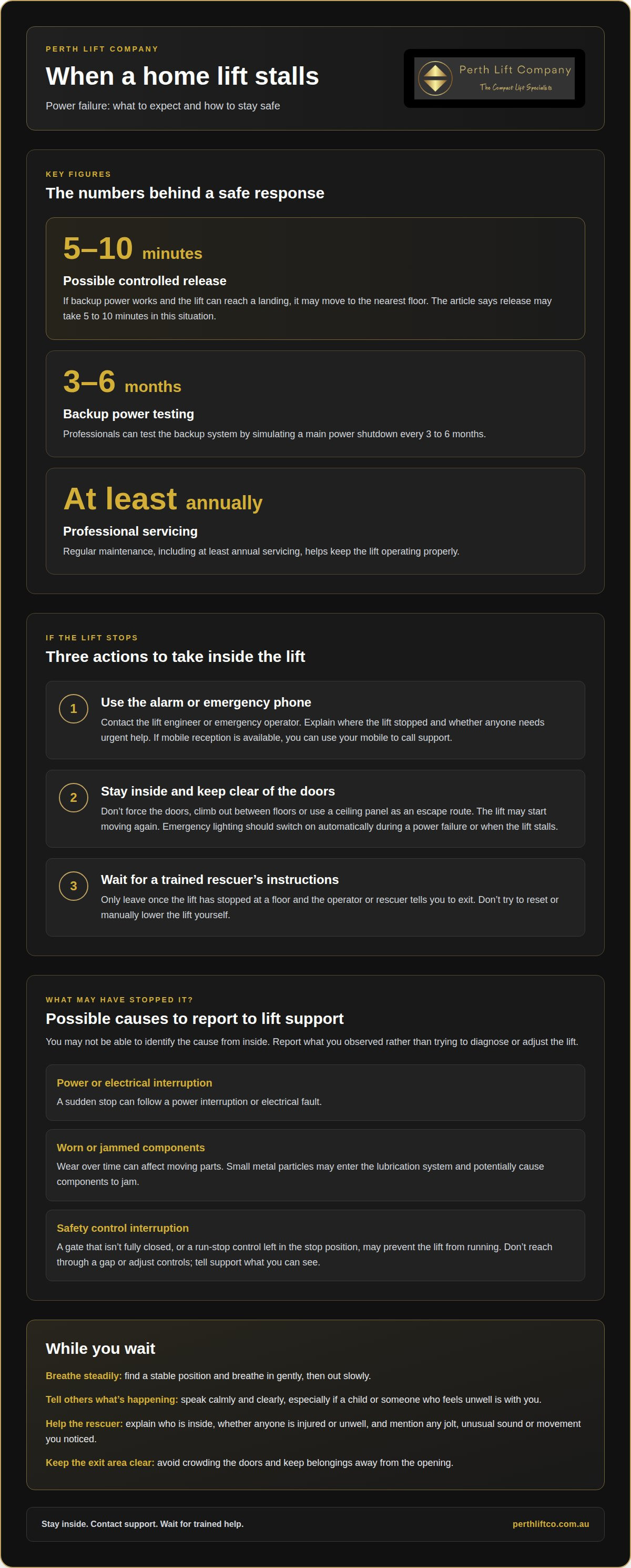
A power failure may stop the lift, but emergency lighting can switch on automatically. Use the alarm or emergency phone to contact support, and wait for instructions.
Contacting lift support
Lift support means contacting the lift engineer or emergency operator for guidance and rescue coordination. Use the lift’s emergency phone, or your mobile if it works, and explain where the lift stopped and whether anyone needs urgent help. How much does an emergency home lift callout or repair cost in Australia? The cost depends on the fault, parts and work required, and is provided after a quote request.
Using emergency communication and lighting
The alarm, emergency phone and lighting help occupants communicate and see inside a stalled lift. Press the alarm button, then use the phone to report the problem and follow the operator’s directions. If you have mobile reception, call the lift engineer or emergency operator. Emergency lighting should turn on automatically during a power failure or when the lift stalls, helping occupants stay oriented while they wait.
Rescue timing and backup power testing
Backup power may move the lift to the nearest floor, allowing a controlled exit. If it does, release may take 5 to 10 minutes. The time depends on whether backup power works and the lift can reach a landing. Professionals can test the backup system by simulating a main power shutdown every 3 to 6 months. Regular maintenance, including at least annual servicing, helps keep the lift operating properly.
Exiting after an emergency landing
An emergency landing brings the lift to a floor so occupants can leave safely. Wait until the lift has stopped and the operator or rescuer tells you to exit. Don’t force the doors or try to reset the controls. Can a home lift be manually lowered or reset after it gets stuck? Don’t attempt this yourself. Wait for the lift engineer or a trained rescuer, as the lift may start moving again. Stay clear of moving parts and report any unusual sounds or movement.
SHOULD YOU CLIMB OUT OF A STUCK ELEVATOR?
If a home lift stops between floors, stay inside and don’t try to climb out. If the doors open onto a gap or appear close to a landing, don’t step through. The lift could start moving again, creating a serious risk. Wait for emergency personnel to guide your release.
A stalled home lift receives air from outside, so occupants have enough air while waiting for help. Feeling confined can make the wait seem longer, but an open gap or ceiling panel is not a safe escape route. Keep clear of the doors and don’t force them, even if the lift appears close to a floor.
If your anxiety rises, find a stable position inside the lift and focus on breathing steadily. Breathe in gently, then breathe out slowly, repeating this while you wait. It gives you something simple to focus on instead of repeatedly testing the doors or controls.
Tell anyone else inside that the lift has stopped and help is being arranged. Speak calmly and clearly, especially if a child or someone who feels unwell is with you. Avoid crowding the doors, and keep belongings away from the opening so the rescuer has clear access.
Don’t use a ceiling panel as an escape hatch. It’s intended for technicians, not occupants, and climbing through could expose you to moving parts or a fall. Stay inside until emergency personnel give instructions. Even if the lift doors open between floors, don’t crawl out: the lift may move again before you reach the landing.
Common causes of a home elevator getting stuck
A home lift can stop after a power failure, a component fault or a safety control interruption. You may not be able to see the cause from inside, so don’t try to diagnose it by forcing controls or doors. If the lift stalls near a landing, note its position and tell the lift engineer what you observed.
Wear and tear can affect moving parts over time. Small metal particles may enter the lubrication system, potentially causing components to jam or the lift to stop. A sudden stop can also follow an electrical fault or power interruption. The lift engineer can inspect the system and identify the cause before the lift resumes operation.
If the lift stops close to a landing, note whether the gate is fully closed and where the run-stop control is positioned. A gate that isn’t fully closed, or a run-stop left in the stop position, may prevent the lift from running. Don’t reach through a gap or adjust either control while inside. Report what you can see to support staff.
Australian safety standards and regulatory requirements for residential lifts depend on the lift and its installation. Don’t assume one general rule applies to every home elevator; the relevant requirements must match the lift type.
Lift safety depends on using the controls as intended. Don’t force doors open or climb out if they open between floors, because the lift could start moving again. Keep doors and gates unobstructed, and allow occupants to leave before entering. These simple actions help avoid interfering with the lift’s normal operation.
Regular maintenance helps keep a home lift working properly. Arrange professional maintenance annually, and report repeated stops, unusual movement or a gate that won’t close. Recording when each fault occurred can help the engineer distinguish a one-off power interruption from a recurring mechanical or control issue.
Cooperating with a professional rescuer
When the rescuer arrives, clearly explain who is inside and whether anyone has an immediate need. Say if anyone is injured, feels unwell or uses a mobility aid. Knowing what happens if a home lift gets stuck includes describing the situation accurately, even if you don’t know why the lift stopped. Don’t guess about technical faults.
If the rescuer asks questions through the doors or emergency phone, answer briefly and clearly. Mention what you noticed, such as a sudden jolt or unusual sound, and when it happened. Understanding what happens if a home lift gets stuck also means recognising that the rescuer may need to assess the situation before giving instructions.
Listen carefully and ask for clarification if you can’t hear an instruction. Keep your hands, feet and belongings away from the doors and any opening. Don’t press buttons, force a gate or handle equipment while the rescuer is working. Leaving the controls untouched helps avoid interfering with the professional’s assessment and release process.
Wait for the rescuer to tell you when and how to leave, even if the doors open onto a landing. They may need to secure the lift and explain where to step. Follow their directions, take care at the threshold and mention any difficulty moving before you exit. If someone else is inside, don’t rush them or crowd the doorway.
Once outside, tell the rescuer about anything unusual you experienced during the stoppage or release. For example, report whether the lift shifted while you waited or whether a control behaved unexpectedly. This information can help the lift engineer assess the incident. Don’t use the lift again until a responsible professional says it’s safe. To discuss home access options, contact Perth Lift Company.
Perth Lift Company
Perth Lift Company helps households plan for changing access needs and choose a lift that suits their daily routines. If a lift has stalled, follow the safety guidance above and wait for a professional rescuer. For longer-term access planning, the company offers premium home lifts, vertical platform lifts and delta platform stair lifts.
The right option depends on the home’s layout, who will use the lift and how they need to move between levels. Discussing these practical details can help narrow the choice between a home lift and a platform lift. A new installation is a long-term access solution, not a response to an immediate breakdown.
Contact Perth Lift Company to discuss which lift option may suit your home and access needs.
Plan for dependable access at home
If you’re still wondering what happens if a home lift gets stuck, make sure everyone in your household knows how to respond. Include the lift’s emergency communication method in your household plans, and arrange regular maintenance. A clear plan can help occupants feel prepared and give rescuers useful information if the lift stops.
For longer-term access needs, Perth Lift Company offers SWIFT Pro Lifts, SWIFT Lite Lifts and Pneumatic Vacuum Elevators, including PVE 30, 37 and 52. The right choice depends on your home and how you need to move between levels, so focus on what will make everyday access practical for your household.
Contact Perth Lift Company to discuss your home lift options. A considered plan can help you move forward with greater confidence.
Frequently Asked Questions
What if I do get stuck in the lift?
Stay inside and use the lift’s alarm or emergency phone to report the stoppage. Tell the operator where the lift is, how many people are inside and whether anyone needs medical attention. Keep your phone available if you used it to call. Don’t operate unfamiliar controls or climb out; wait for the rescuer’s directions before moving towards an exit.
What should you do immediately if a home lift gets stuck in Australia?
First, stop pressing the lift controls and use the alarm or emergency phone to get assistance. Give the operator the home address, the lift’s position if you know it, and any immediate health concerns. If you’re calling from outside, stay nearby and keep the entrance accessible for responders. Don’t try to rescue someone by forcing the lift doors.
How can passengers safely contact help from inside a stuck home lift?
Use the lift’s emergency phone or alarm button to reach support. Speak clearly and describe what happened. If neither works and your mobile has reception, call the lift engineer or emergency operator. Share the home address, number of occupants and any injuries or urgent needs. Keep the call brief, but stay available for further instructions.
What should you avoid doing when trapped in a home lift?
Don’t force the doors, climb through a gap or use the ceiling panel as an exit. Avoid reaching into the lift shaft, tampering with equipment or repeatedly pressing buttons. Keep your hands, feet and belongings clear of the doors instead of trying to hold them open. These actions can expose you to moving parts or interfere with a safe rescue.
What are the emergency procedures for a stuck residential lift in Australia?
Contact lift support using the cabin’s alarm or emergency phone, then explain the lift’s location and the occupants’ needs. Remain inside and wait for the responder’s instructions. Anyone outside should not prise open the doors or move the lift. Once a rescuer has secured the situation, follow their directions for leaving the cabin.
When should you call emergency services for someone trapped in a home lift?
Call emergency services if someone is injured, experiencing a medical emergency, in immediate danger, or affected by a fire or another urgent hazard. Tell the operator that someone is trapped in a residential lift, and give the exact address, access details and any known health concerns. If the lift has stopped but there’s no immediate danger, contact the lift’s support service.