
A lower call-out fee doesn’t always mean lower servicing costs over time. In Australia, the cost of servicing a home lift depends on whether you choose a scheduled service or a broader maintenance contract. Lifts should be serviced annually by qualified technicians.
It’s understandable to want a clear figure before committing, especially when an unexpected breakdown can bring additional costs. In Perth, routine service and breakdown call-out charges can vary, so compare what each fee covers and which costs may be charged separately.
This guide explains what affects servicing costs, how basic and comprehensive contracts differ, and what NSW visits and call-outs may cost. It also outlines what to consider when choosing a lift provider, so you can weigh the likely costs against the maintenance your lift needs and make a more informed decision.
Key Takeaways
- Most home lifts need servicing once a year, but the lift’s type and usage can affect the recommended schedule.
- Compare what a basic visit covers with a comprehensive contract, including whether repairs and replacement parts are charged separately.
- In NSW, routine visits and breakdown call-outs can have different charges; travel, timing and the work required can affect the total.
- Choose a provider by looking closely at the service scope, call-out terms and how maintenance needs are matched to your lift.
What is the difference between a basic and comprehensive contract?
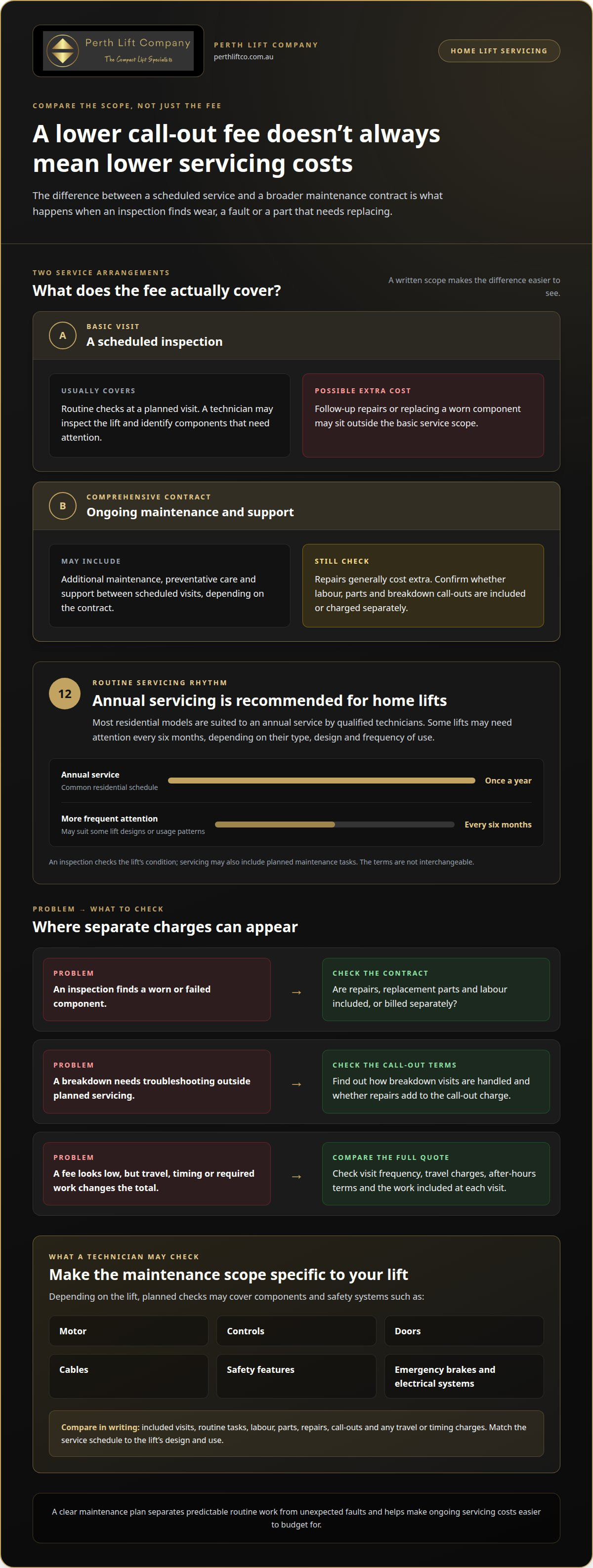
A basic visit covers routine checks, while a comprehensive contract may include ongoing preventative maintenance. Lifts should be serviced annually by qualified technicians, and the contract scope determines what work is included between scheduled visits.
Basic visits and comprehensive contracts
A basic service is a scheduled inspection, while a comprehensive contract may include additional maintenance and support. The distinction matters because follow-up repairs may be charged separately. For example, a technician might inspect a lift during a routine visit, but replacing a worn component could fall outside the basic service scope.
Scheduled inspections and preventative care
A scheduled inspection checks lift components at planned intervals. Preventative maintenance also addresses wear before it develops into a larger fault. Depending on the lift, a technician may check the motor, controls, doors, cables and safety features, and identify parts that need attention. Annual servicing by qualified technicians is recommended.
Contract coverage and exclusions
A maintenance contract sets out which routine tasks are included and which costs remain separate. Repairs generally cost extra on top of a maintenance package, so coverage matters when a technician finds a fault during an inspection. Compare the written scope for included visits, labour, parts and call-outs. For instance, a contract could cover planned checks without covering a replacement door component.
Maintenance, cost and safety
Preventative maintenance helps manage costs by identifying wear before it develops into a breakdown, although it can’t remove every repair expense. A yearly home lift service is usually a warranty condition and helps keep safety systems working. Checks of emergency brakes and electrical systems can also reveal issues that need attention. Confirming what the contract covers makes ongoing lift maintenance easier to budget for, while regular servicing supports safe operation.
How much does lift maintenance cost in NSW?
The servicing schedule helps explain the range: some residential lifts need an annual service, while others require attention every six months. Lift type, design and frequency of use all influence how often components need inspection and routine maintenance.
For most residential models, annual servicing is suitable. A lift used regularly throughout the day may need more frequent attention than one used occasionally, particularly if its design calls for shorter service intervals. Some firms recommend inspecting a home lift every six months. An inspection checks condition; servicing may also involve planned maintenance tasks, so the terms aren’t interchangeable.
Commercial lifts are commonly serviced every six months, while busy strata lifts may need quarterly or even monthly visits. Those schedules reflect heavier traffic and use than a typical residential lift. They aren’t a direct guide for a private home, where the lift’s design and operating pattern help determine the appropriate routine.
In Perth, travel and the work required can affect service costs. When comparing quotes, consider the visit frequency, the lift’s design and what the quoted service includes, as well as any travel charges.
To understand what a quote covers, compare its visit frequency and the work included at each inspection. A contract with more frequent visits may cost more upfront, but it also provides more opportunities to identify wear in components before a fault develops. The best schedule is one that reflects the lift’s usage and design, rather than applying a commercial timetable to every home.
Routine service visit and breakdown call-out prices
In NSW, routine visit fees and breakdown call-outs are separate charges, and repairs may add to either bill.
A breakdown call-out is different from planned annual servicing: it may involve troubleshooting an unexpected fault. If the technician finds a failed component, the repair can cost extra.
Factors affecting servicing prices
Servicing costs vary with the lift type, work required, location and timing. An after-hours call-out may cost more than a planned daytime visit, and travel can affect costs outside central Perth. Replacing a part is different from a routine inspection, so the call-out fee alone may not represent the total bill.
Hydraulic and pneumatic lifts have different designs and components, which affect the maintenance work required. Purchase prices are separate from servicing charges: the lift type, number of floors and installation requirements influence the purchase cost, not a standard call-out rate.
Annual home lift servicing prices
A standalone service and a maintenance package can include different work and support. Compare the scope and visit frequency rather than treating the lowest initial figure as the full ongoing cost.
Routine service fees and repair costs are different expenses, so don’t assume every household will pay both at every visit. A clear maintenance plan helps distinguish predictable routine work from faults requiring repairs.
Choosing a lift service provider
Choose a provider whose experience suits your lift and its accessibility role at home. A residential lift and a platform lift have different components and operating needs. Servicing should reflect the installed system, its use and its maintenance requirements. A provider familiar with the lift’s make and model can tailor inspections to its controls, doors and safety features.
Look for a clear explanation of routine servicing, repairs and breakdown call-outs. A scheduled inspection may be covered by one arrangement, while a replacement part or breakdown visit is charged separately. A written scope should show which work is included, how call-outs are handled and when additional charges apply. This makes quotes easier to compare and reduces the chance of surprises after a fault.
Technical capability matters, too. Lift maintenance can involve mechanical components, electrical systems and safety equipment, so the provider’s work should suit the particular home elevator. The relevant Australian Standards provide a reference for lift design, installation and maintenance. A useful service record should identify completed checks and any component needing attention, giving the next technician practical context.
Service quality also has a consumer protection dimension. The ACCC says Australian businesses must provide services with acceptable care and skill, make them fit for any stated purpose, and supply them within a reasonable time. For instance, if a service was agreed for a particular lift issue, its scope should address that purpose. Clear communication about findings and repairs supports informed decisions.
Compare the service scope, technical fit, repair process and call-out terms together, rather than choosing on price alone. That approach helps you judge whether ongoing support suits your lift’s use and accessibility needs. To discuss lift options and servicing considerations, get guidance on your home lift.
Perth Lift Company
Perth Lift Company helps homeowners in Perth consider lift options for access between levels. Its range includes residential elevators, compact domestic lifts, vertical platform lifts and stairlift solutions. The right option depends on the home’s layout and access needs; the lift type and design also shape its ongoing maintenance.
If you’re weighing servicing costs alongside a new lift or reviewing which type may suit your home, Perth Lift Company can help you explore these options. Contact Perth Lift Company to discuss your home access requirements.
Plan for dependable access at home
Understanding home lift servicing costs in Australia can help you plan beyond the next appointment. Keep service records together, note recurring issues and consider how changing mobility needs could affect the lift that suits your household. Remember to arrange annual servicing by qualified technicians.
If you’re considering a lift or reviewing options for your home, Perth Lift Company can help you explore suitable products and the factors that shape your decision. Sharing your home layout and access priorities provides a practical starting point, beyond comparing a single cost figure.
Contact Perth Lift Company to talk through your home access requirements. A thoughtful next step can help you move forward with greater clarity and confidence.
Frequently Asked Questions
What Is Lift Servicing?
Lift servicing is planned technical work that checks a lift’s operation and condition. A technician may examine controls, doors, cables and safety equipment, then identify components showing wear. For example, a door that doesn’t close smoothly can be noted for attention before it disrupts everyday access. Keep the service record to help plan future maintenance.
What are the ongoing costs of a home lift?
Ongoing costs can include servicing, electricity, insurance adjustments and repairs. For a Perth household, the total depends on lift use and the maintenance arrangement. Repairs or replacement parts can add costs beyond routine servicing, so budget for them separately.
What is the average home lift servicing cost in Australia per year?
A comprehensive contract may differ from a single planned service because the included work and support vary. To compare costs fairly, check the number of visits, included maintenance tasks and whether repair labour or parts are charged extra.
How much does a single home lift service visit cost in Australia?
Service costs depend on the visit’s scope and location. A planned inspection is distinct from a breakdown call-out, which may involve fault-finding and additional repair work.
What factors affect residential lift maintenance prices in Australia?
Residential lift servicing costs depend on the lift’s design, service frequency, location, travel and work required. If a visit reveals worn components, repairs may cost extra beyond routine checks. Usage also matters: a frequently used lift may need a different maintenance schedule from one used occasionally. Compare contract inclusions as well as visit charges to understand likely ongoing costs.
How do servicing costs compare for hydraulic, traction, and vacuum home lifts?
Servicing costs vary with each lift’s design, components, maintenance schedule and contract, so the type alone doesn’t determine the total. Hydraulic and traction systems have different mechanical arrangements, while vacuum lifts use pneumatic technology. Pneumatic lifts are described as needing little to no maintenance, but annual servicing by a qualified technician remains recommended. Compare the service scope and repair terms for the model.