
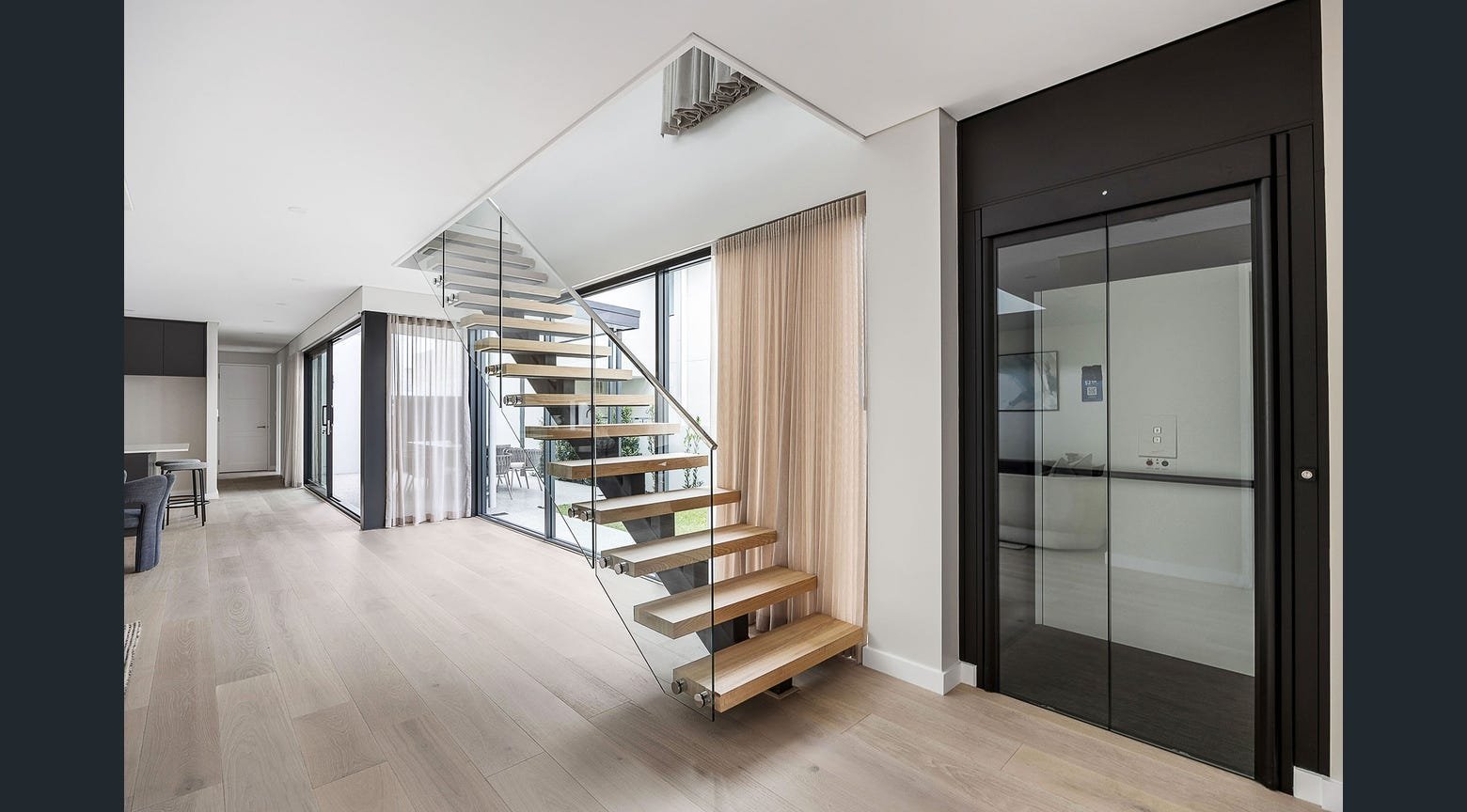
A home elevator can improve accessibility, but there is no established percentage increase in resale value. No independent Australian study proves a fixed uplift in property value from installing a home lift. The long term value of a home elevator is better judged by its practical benefits, including easier movement between floors and flexibility as household needs change.
It makes sense to consider both how a lift could affect buyer appeal and how useful it would be to you now. This article explains how a lift may support ageing in place, improve access and influence buyer interest, while being clear about what is known about property value. The home’s layout, the lift’s everyday function and the needs of future occupants all matter when weighing the decision.
Key Takeaways
- Consider how easier movement between floors could support staying in your home as needs change.
- Assess whether a lift would make more of your home practical for residents, visitors and future occupants.
- Think beyond resale appeal: accessibility and day-to-day usefulness can shape how buyers view a property.
- Separate practical benefits from price expectations, as there’s no independent Australian study proving a fixed increase in property value.
Ageing in place and avoiding a move
In Australia, ageing in place means continuing to live at home as your needs change. A home elevator may make this more practical by improving access between levels.
Planning to age in place
Ageing in place is staying in your home as you grow older, rather than moving because daily tasks become harder. Future-proofing means considering how the home can work for you later, not only today. Around 75 per cent of Australian homeowners aged 65 to 74 want to remain in their homes as they age; among homeowners over 75, the figure is around 82 per cent. These preferences show why it can be useful to consider access before stairs become a barrier.
Accessibility as needs change
Accessibility means being able to reach and use the important parts of a home. Stairs can restrict access to bedrooms, bathrooms or living areas for someone whose mobility has changed because of illness, injury or age. A lift offers another route between floors, helping residents use more of their existing home. It supports access but does not replace other measures suited to an individual’s mobility needs.
Planning also means thinking about the household’s routines. For example, if bedrooms are upstairs, carrying laundry or reaching a bathroom may become difficult when climbing stairs is tiring. A lift can make those parts of the home more accessible, potentially reducing pressure to relocate solely because of the layout. About 7 per cent of hospitalisations from falls were attributed to falling from stairs, so reducing reliance on stairs may also matter for household safety.
Moving is another factor. Relocation can take weeks or months and disrupt household routines and familiar surroundings. A lift may help someone remain in a home they know while retaining access to its different levels. This practical benefit is separate from any effect on resale: its first value is whether the home continues to suit its occupants as their needs change.
Broader buyer appeal and home usefulness
A lift can change how people use a multi-storey home, not just how they move between floors. For buyers who find stairs difficult, access to every level can make more of the property usable.
Yes, an existing home can be retrofitted with an elevator, including an external installation that helps preserve indoor space. In Perth, residential lift installations require a building permit under the Building Act 2011 (WA) and must comply with AS 1735 and the National Construction Code.
Buyer appeal partly depends on who can comfortably use the home. A household with a family member who has limited mobility may value access between living areas and bedrooms. A visiting relative who avoids stairs may benefit too. These practical advantages can make a property suitable for more people, although an elevator will not matter equally to every buyer.
Consider the home’s layout as well as the lift. In a two-storey home, connecting the main living area with upstairs rooms can make both levels easier to use. An external lift may preserve more internal floor space, while an internal installation may suit a home with an appropriate location. Available space and the building layout shape the options.
For energy use, modern home elevators consume electricity similar to a regular home appliance. Some Perth installations may require a three-phase power upgrade from Western Power, depending on the lift and site requirements.
This distinction matters when weighing everyday usefulness against future resale. Buyers may value a lift if it solves a genuine access issue or makes the home’s layout more practical. If a vertical lift suits the property, pneumatic vacuum elevators are one option to consider.
Accessibility for residents and guests
Accessibility affects whether residents and visitors can comfortably use different areas of a home. In a two-storey property, stairs may prevent a guest with limited mobility from reaching an upstairs bathroom or bedroom. A lift offers an alternative between levels, making more of the home accessible during visits and everyday routines.
For families, improved access can change how they spend time together. A grandparent who uses a walking aid, for example, may be able to join a gathering upstairs instead of staying on the ground floor. Someone recovering from an injury may also find it easier to move between levels. The benefit depends on the home’s layout and the person’s mobility, not simply on having a lift.
Accessibility is a practical consideration when planning to stay in a home long term. A lift may help residents continue using bedrooms, living areas or bathrooms on different levels. It can make a property more functional for people with varied mobility needs, including visiting relatives. That usefulness is distinct from any guaranteed change in resale price.
Home lifts don’t need to be updated every 5 to 10 years. That doesn’t mean every lift has the same working life; condition, use and maintenance all matter. Regular maintenance can help identify wear or faults that affect safe, reliable operation.
Consider a household where an upstairs bedroom remains important but stairs become difficult for one resident. A lift can preserve access to the room without requiring the family to reorganise how they live. Guests may benefit too, particularly if they use mobility aids or find stairs difficult. The practical value is that more people can access more of the home.
Assess accessibility alongside the property’s layout and residents’ needs. A lift can support independence and shared family life, and its ongoing care is part of owning a residential lift.

Evidence for home lifts adding property value
Australian evidence does not establish a fixed resale increase for home lifts. The long term value of a home elevator is better assessed by how well it suits the property and the access it provides.
Long-term value across elevator types
Long-term value depends on whether a lift meets residents’ needs and suits the home’s layout. A passenger elevator connects floors, while a platform lift addresses a different access requirement. Neither is the right choice for every Australian home. Consider which levels people need to reach, the available installation space and ongoing care. A well-matched lift can make daily use more practical, which may matter to future buyers looking for accessible features.
Home elevators compared with stairlifts
An elevator travels between floors; a stairlift carries a person along a staircase. Each addresses a different access challenge, so suitability matters more than a simple resale comparison. Costs vary by system, property and installation work, so general price comparisons can be misleading. A stairlift may suit a home where one staircase is the main obstacle. An elevator may be more useful when occupants need access to rooms on separate levels.
Resale value added by a home elevator
No independent Australian study proves a fixed percentage increase in property value from a home lift. A specific resale uplift should not be treated as a dependable return when planning an installation or renovation. Some buyers may value a lift that meets an access need; others may prioritise different features. Assess the long term value of a home elevator by weighing its usefulness now against its likely relevance to future occupants.
For a lift that suits your home’s access needs, explore lift options.
Perth Lift Company: Pneumatic Vacuum Elevators (PVE 30, 37, 52)
Perth Lift Company offers Pneumatic Vacuum Elevators (PVE 30, 37, 52) for homeowners considering easier movement between levels. The right choice depends on your home’s layout, available space and the access needs you want to address. These practical considerations matter more than assuming a lift will deliver a set resale increase.
Other options include hydraulic systems, shaftless models and Vertical Platform Lifts. Consider each in relation to how you use your home, who needs access and which areas need to connect. Matching a lift to the property and its occupants keeps the decision grounded in everyday usefulness while supporting the long term value of a home elevator.
If you’re weighing up a lift for your home, contact Perth Lift Company to discuss your requirements.
Make your next move with confidence
Before deciding, picture an ordinary week at home several years from now. Which rooms do you want to keep using, and who needs to reach them? These questions help you weigh the long term value of a home elevator against the space and building changes an installation may involve. They also give your plans a clear purpose beyond adding equipment to the property.
A useful next step is to discuss how your home’s layout and access needs shape the options. Perth Lift Company supplies and installs residential lifts and mobility solutions in Perth, helping you consider a suitable lift for the way you want to live. The decision is personal, and future buyer appeal will depend on their needs.
Contact Perth Lift Company to discuss the next step for your home. A considered plan can help you move forward with greater confidence.
Frequently Asked Questions
Does a home elevator add value to your property?
A lift may improve a property’s practical appeal, but there is no established Australian percentage increase to rely on. A buyer who needs easier movement between floors may value the access, while another buyer may not. In Perth, consider whether the lift suits the home’s layout and likely occupants. Keeping service records can also help show that the system has been maintained.
What are the ongoing maintenance costs for a residential elevator?
Allow for annual servicing by a qualified technician. The cost of a particular installation depends on the lift system and service requirements. Regular maintenance helps owners keep scheduled care distinct from repairs needed to address a fault.
When might a home lift not add value?
A lift may add little buyer appeal if it does not solve a practical access need or is poorly suited to the home. For example, one serving a rarely used level may be less useful than one connecting everyday rooms. Buyers may also consider the space it occupies and the upkeep involved. Its value is clearest when it supports how residents use the property.
Which homes are most likely to benefit?
Multi-storey homes may benefit when essential rooms are on different levels. A household with a resident who uses a mobility aid, or regularly hosts guests who struggle with stairs, may find a lift especially useful. In Perth, the floor plan, available installation space and routes between frequently used rooms help determine whether a lift would improve daily access.
What are the annual maintenance and repair costs of a residential lift in Australia?
Repair costs are separate and depend on the fault, the parts involved and the work required. A control issue, for example, differs from replacing a worn mechanical component. Keeping records of service visits and faults helps owners track the system’s condition over time.
Does installing a home elevator increase property value in Australia?
A lift may appeal to buyers who need easier access between floors, but Australian evidence does not establish a fixed increase in sale price. Treat it first as a feature that supports the property’s usability. If you sell, explain which levels the lift serves and keep maintenance records ready so interested buyers can understand its practical role.