
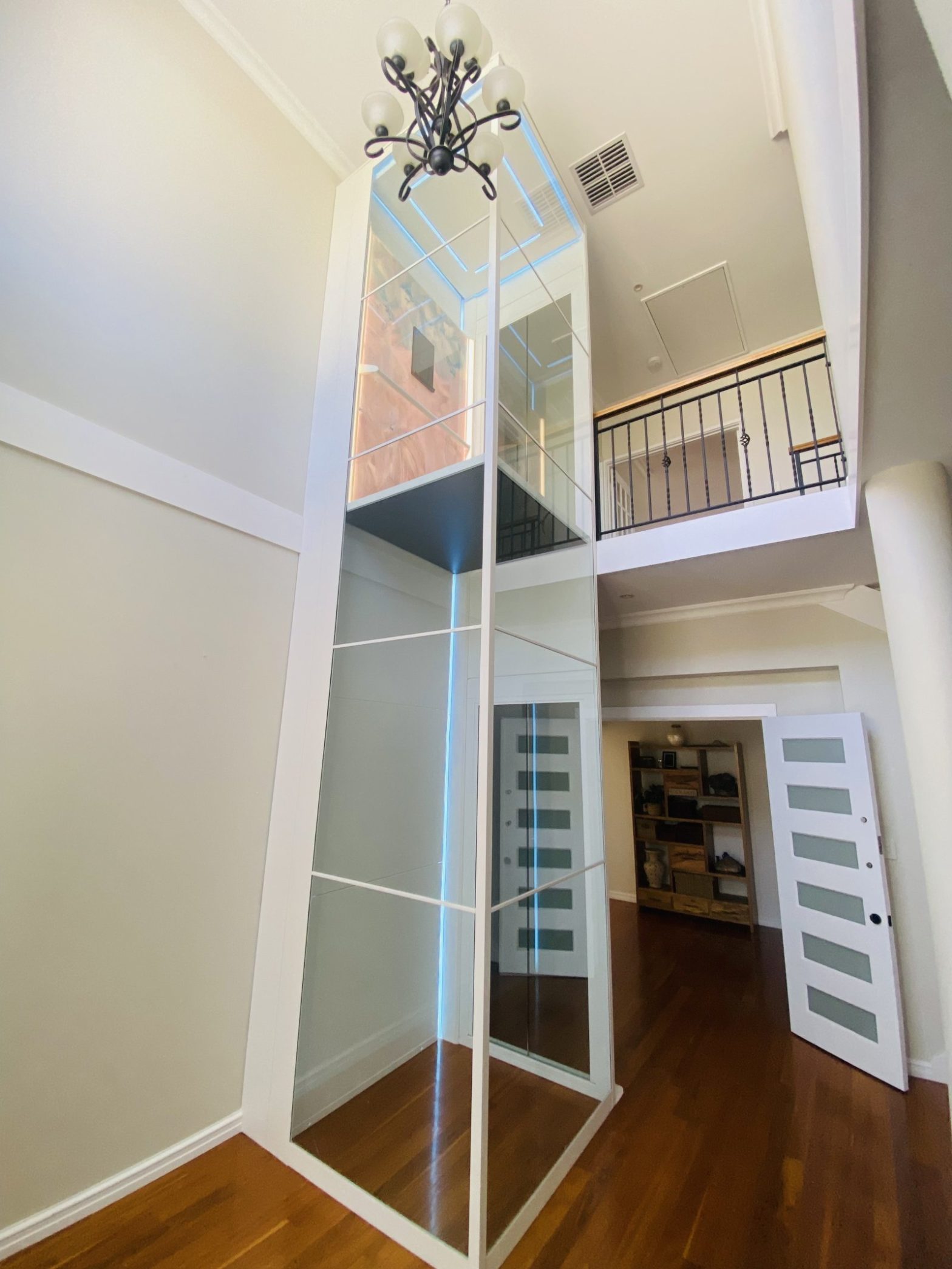
A quieter lift choice starts before you decide where it goes. In Australia, a well-installed home lift typically operates at roughly 40 to 70 decibels, depending on its drive type. If you’re wondering whether home elevators are noisy, they can make motor or pump sounds, and vibration may travel through a home’s structure. A bedroom beside a lift isn’t automatically ruled out, but the lift type and its position matter.
It’s reasonable to consider noise alongside access, comfort and your home’s layout. What you hear in a nearby room depends not only on the lift’s operation, but also on how sound and vibration travel through the building.
This guide explains the sounds a home elevator can make, how they may affect nearby rooms and what to consider when choosing a quieter lift. The drive type, power-unit location and lift position can all shape the experience.
Key Takeaways
- Distinguish sounds travelling through the air from vibration carried through the building, as each can affect nearby rooms differently.
- Compare lift drive types and how their motors or power units operate before settling on a location.
- Plan the lift’s position with bedrooms and studies in mind, including where a separate power unit could sit.
- Pay attention to new scraping, repeated impacts or changes in vibration, which can signal that a lift needs attention.
What sounds can a home elevator make?
Home elevators can produce motor, pump and mechanical sounds, as well as vibration that travels through connected parts of a building. The lift type, installation and room layout all affect how noticeable these sounds are.
Noise profiles by elevator type
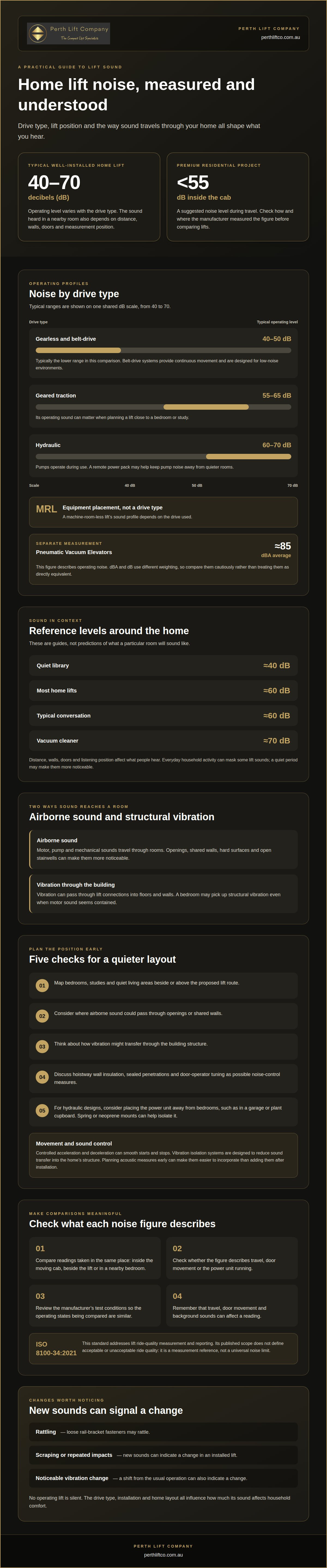
Each drive system creates a distinct operating sound, which matters when placing a lift near a bedroom. Geared traction lifts typically produce 55 to 65 dB, while hydraulic lifts produce 60 to 70 dB as their pumps operate. Gearless and belt-drive lifts typically produce 40 to 50 dB. Machine-room-less (MRL) describes equipment placement, so its sound profile depends on the drive used.
Are vacuum or pneumatic home elevators noisy? Pneumatic Vacuum Elevators average around 85 dBA in operating noise. That figure describes operation, but the sound heard in a room also depends on its position and the building around it.
Sound and vibration perception
Airborne sound travels through rooms, while vibration passes through a lift’s connections into floors and walls. This distinction matters: a bedroom may pick up structural vibration even when the motor sound seems contained. Hard surfaces and open stairwells can also make operating sounds more noticeable. Changes in outdoor background noise may make the lift seem louder or quieter by comparison.
Comparing noise measurements
A decibel figure is useful only when its measurement conditions are clear. Readings taken inside a moving cab, beside the lift or in a nearby bedroom describe different listening positions. Travel, door movement and background sounds can also affect comparisons. ISO 8100-34:2021 addresses lift ride-quality measurement and reporting, but its published scope doesn’t define acceptable or unacceptable ride quality. It’s a measurement reference, not a universal noise limit.
Noise causes and household comfort
Hydraulic pumps and mechanical components can create sound and vibration during operation. Loose rail-bracket fasteners may rattle, while new scraping, repeated impacts or a noticeable change in vibration can indicate a change in an installed lift. These sounds matter in everyday spaces: a lift starting near a bedroom may interrupt quiet routines, while vibration through a shared wall can stand out at night.
Acoustic impact on the home environment
Yes. Sound and vibration can reach nearby rooms or travel between floors through walls and connected structures. A lift beside a bedroom may be more noticeable during quiet periods, while everyday household activity can mask some operating sounds.
For context, a quiet library measures around 40 dB, typical conversation is about 60 dB, and a vacuum cleaner is around 70 dB. Most home lifts operate at around 60 dB, while Pneumatic Vacuum Elevators average around 85 dBA. These comparisons are guides, not direct room-to-room predictions: distance, walls, doors and measurement position affect what people hear. dB and dBA readings also use different weighting, so compare figures cautiously.
Before choosing a lift, map its route against rooms used for sleeping, working and daily activities. Consider these planning points:
- Mark bedrooms, studies and quiet living areas beside or above the proposed lift position.
- Identify where airborne sound could pass through openings or shared walls.
- Consider how vibration might transfer through the building structure.
- Discuss hoistway wall insulation, sealed penetrations and door-operator tuning as possible noise-control measures.
- For hydraulic designs, consider whether the power unit can sit away from bedrooms.
No operating lift is silent, but its layout and construction affect how much its sounds influence household comfort. Vibration isolation systems are designed to reduce sound transfer into the home’s structure. Planning early also makes it easier to incorporate acoustic measures than to add them after installation.
Acoustic upgrade costs depend on the measures, materials, access and design required. The price depends on the case and is given after a quote request. Considering sound control alongside the home lift options helps connect the choice of lift with the rooms around it.
Choosing a quieter home lift
Choose a lift by comparing its drive system, operating noise and planned position. In Australia, well-installed home lifts typically operate at roughly 40 to 70 decibels, depending on drive type. For a premium residential project, aim for an inside-cab noise level below 55 dB during travel. These figures help frame the decision, but test conditions matter.
Belt-drive systems provide continuous movement rather than abrupt mechanical lifting and are designed for low-noise environments. Controlled acceleration and deceleration can also smooth starts and stops. These qualities may suit a lift beside a bedroom or study, where sudden changes in sound can be especially noticeable.
Hydraulic lifts need a different approach to planning. A remote power pack can be placed in a garage or plant cupboard, away from bedrooms and living areas. Spring or neoprene mounts can help isolate the unit. Moving the power source does not eliminate every operating sound, but it can separate pump noise from quieter parts of the home.
- Match the lift’s drive type to the rooms beside and above its route.
- Compare noise figures measured inside the cab during travel, not readings taken elsewhere.
- Review the manufacturer’s stated test conditions so comparisons use similar operating states.
- Confirm that the proposed power-unit position and isolation measures suit the building layout.
Ask what a sound figure describes: lift travel, door operation or the power unit running. A number without a measurement location can hide important differences. For example, a quiet reading inside the cab does not describe the sound in a bedroom beside a plant cupboard. Discuss the proposed lift location and your household’s quiet spaces when comparing options.
Noise targets are only one part of an informed choice. Door adjustment, careful installation and vibration isolation can also affect how the lift sounds at home. If a bedroom is close to the proposed route, prioritise an operating profile and equipment location designed for quieter use, rather than relying on a decibel figure alone.
What causes noise in a residential elevator?
Wear, movement and loose connections can change an elevator’s sound over time. Worn rollers may make travel rougher, while misalignment can cause rubbing or uneven movement. Motor bearing noise may also become more noticeable as components wear. These changes differ from a steady operating sound, so new scraping or repeated impacts warrant attention.
Loose hardware is another possible source of noise. Fasteners at rail brackets and bedplates can loosen and rattle as the lift moves. Dust on rails can contribute to squeaking, while rollers that need maintenance may add noise. When the sound occurs can help describe it: a rattle during travel differs from a squeak as the cab moves along its rails.
Regular care can help identify developing issues. Annual servicing by qualified technicians can detect roller wear, misalignment and motor bearing noise. Cleaning rails and maintaining rollers can help prevent dust-related squeaking. If an installed lift develops new scraping, repeated impacts or a noticeable change in vibration, report it to the service provider.
A useful description includes when the sound occurs and what it resembles. A phone recording can illustrate the noise, but it cannot establish a calibrated sound level or diagnose its cause. Note whether it happens during travel, at a stop or around door movement. This gives a service professional useful context without treating a recording as a measurement.
- Describe the sound, such as scraping, squeaking or rattling.
- Note whether it happens during travel, at a stop or repeatedly.
- Record any accompanying change in vibration or movement.
- Report new impacts or scraping rather than assuming they’re normal.
For installation planning and lift options suited to your home, explore residential lift options.
Perth Lift Company: Pneumatic Vacuum Elevators (PVE 30, 37, 52)
Perth Lift Company offers Pneumatic Vacuum Elevators (PVE 30, 37, 52) for homeowners considering a lift as part of their home layout. When evaluating whether home elevators are noisy, noise is a key factor to weigh alongside where the lift will sit and how it will serve everyday access needs.
Discuss the rooms beside and above the proposed lift position, along with your priorities for household comfort. Perth Lift Company provides various engineered lift options and Vertical Platform Lifts designed to suit different home requirements. Compare the intended location, operating sounds and practical fit rather than assuming one type suits every home.
For a closer look at the Pneumatic Vacuum Elevator range, explore the PVE 30, 37 and 52 models. Contact Perth Lift Company to discuss your home lift requirements.
Make noise part of your home lift decision
Choosing a lift also means considering how it will fit into daily life. If you’re wondering whether home elevators are noisy, focus on the experience you want in the rooms around the lift, not just the product description. Consider where you read, work, sleep and spend time together, then picture how the lift’s position relates to those routines.
A useful next step is to bring the proposed location and your household priorities into the same conversation. That makes it easier to discuss which lift options may suit your home and what noise considerations matter most for its layout. Perth Lift Company offers different residential lift options, including SWIFT Pro Lifts, SWIFT Lite Lifts and Pneumatic Vacuum Elevators (PVE 30, 37, 52), so you can discuss what may fit your requirements.
Contact Perth Lift Company to talk through your home lift plans and take the next step with confidence.
Frequently Asked Questions
Can the lift go next to a bedroom?
Yes, a home lift can be located near a bedroom, but its drive system and installation affect how noticeable it is. Consider whether the bedroom shares a wall or floor with the lift and whether the power unit can be positioned elsewhere. If your household includes light sleepers, include the bedroom location in the layout discussion before deciding where to place the lift.
Are home lifts noisy?
Home lifts make operating sounds, but how noticeable they are depends on the lift type, its position and the home’s construction. When considering whether home elevators are noisy, account for both the sound inside the cab and vibration that may carry into adjoining rooms. A lift beside a busy living area may be less noticeable than one beside a quiet bedroom.
How loud is a home lift, really?
There isn’t one sound level that describes every lift. For perspective, typical conversation is about 60 dB, while a quiet library is around 40 dB. A measurement near the lift won’t necessarily match what someone hears upstairs, because walls, doors, distance and room layout affect sound. The location and conditions of a measurement matter as much as its number.
What Makes an Elevator “Quiet”?
A quieter elevator combines a suitable drive system with controlled movement and careful installation. Belt-drive systems are designed for low-noise environments, while controlled acceleration and deceleration can smooth starts and stops. Vibration isolation can also limit sound travelling through the building. In a home with a study near the lift, these design and placement choices may matter more than a quiet reading inside the cab alone.
What if an installed lift becomes noisier?
Report new scraping, repeated impacts or a noticeable change in vibration to the lift’s service provider. Describe when the sound occurs, such as during travel or door movement. A phone recording may help illustrate the noise, but it cannot provide a calibrated sound level or diagnose its cause. Annual servicing by qualified technicians can assess components such as rollers, alignment and motor bearings.
How noisy are home elevators in decibels during operation?
Typical operating figures vary by drive type: geared traction lifts produce about 55 to 65 dB, and hydraulic lifts about 60 to 70 dB. Gearless and belt-drive lifts are typically around 40 to 50 dB; screw-drive lifts, around 50 to 60 dB. Pneumatic Vacuum Elevators average around 85 dBA. Compare readings carefully, as dB and dBA use different weighting.