
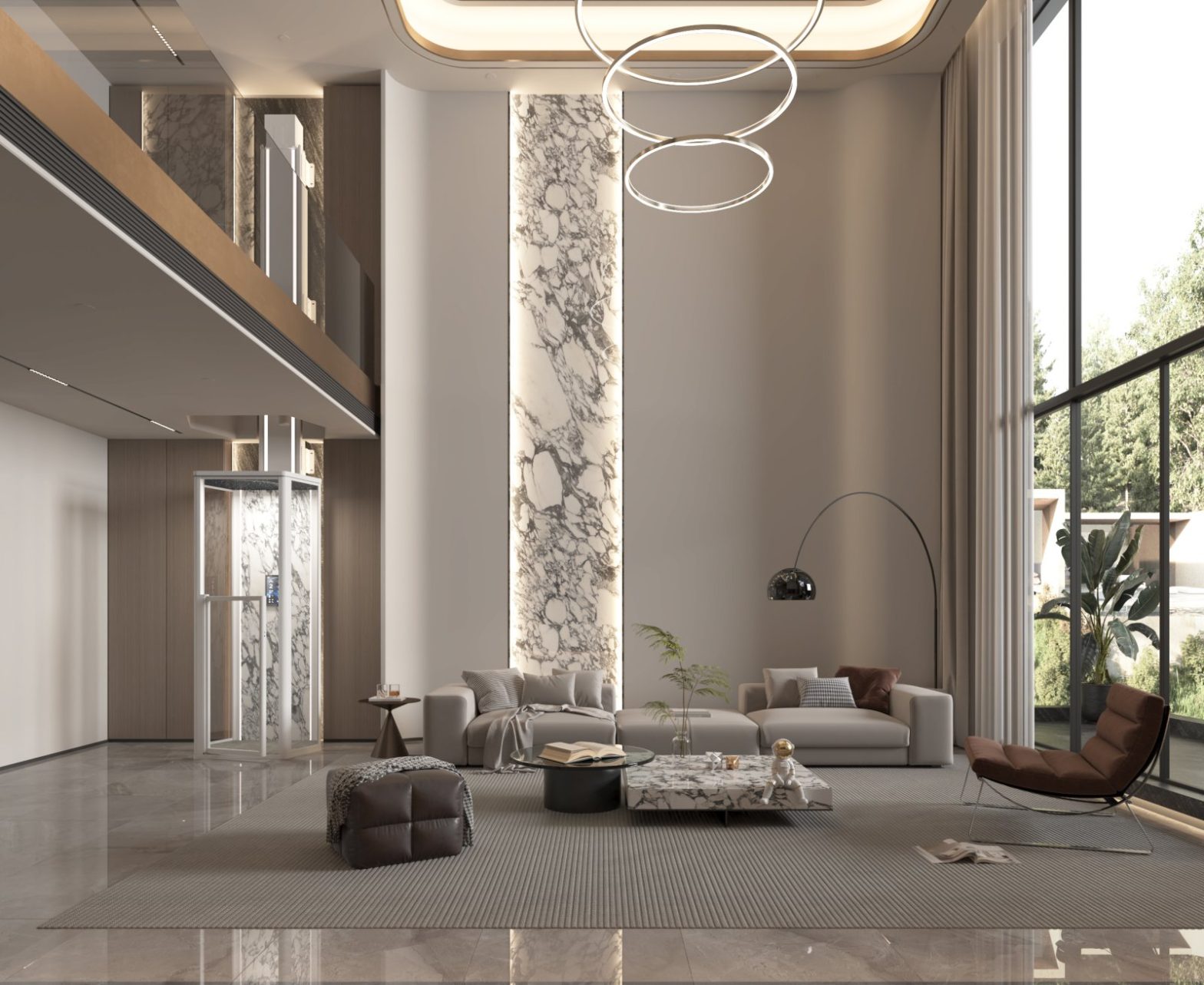
Future-proofing your property shouldn’t feel like a choice between major structural upheaval or settling for limited mobility. Modern platform lifts Western Australia homeowners and businesses are now installing prove that accessibility doesn’t require a full elevator shaft or a massive budget. Whether you’re adapting a coastal home in Cottesloe or upgrading a commercial space in Perth, these systems offer a precision-engineered alternative to traditional lifts that fits into surprisingly tight spaces.
It’s natural to feel overwhelmed by the technical jargon of Australian Safety Standards or the paperwork involved with WorkSafe WA plant registration. You want a solution that’s both compliant and reliable. This 2026 guide will clarify the differences between various models, from compact PVE vacuum lifts to the robust SWIFT Pro series. We’ll also walk you through essential Western Australian building permits and NDIS funding categories to ensure your investment is secure, ethical, and perfectly suited to your long-term needs.
Key Takeaways
- Understand the core differences between screw-driven, hydraulic, and vacuum technologies to select the most efficient drive system for your space.
- Learn how to navigate the essential AS1735 safety standards and WorkSafe WA registration requirements to ensure your installation is fully compliant.
- Discover the practical steps for retrofitting platform lifts Western Australia homeowners use to future-proof their properties without the need for extensive structural masonry.
- Explore how modern, panoramic designs have evolved, allowing you to integrate a high-end architectural feature that adds significant value and style to your building.
Understanding Platform Lifts in the Western Australian Context
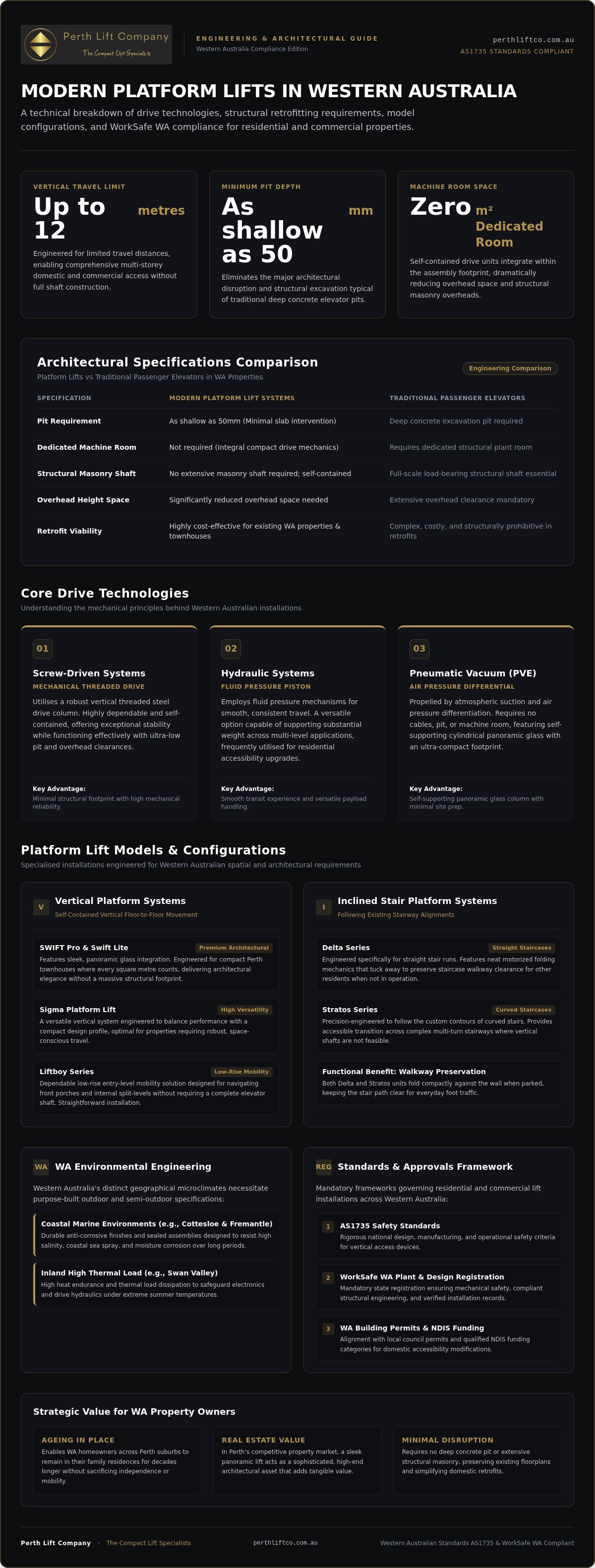
A platform lift is a vertical or inclined transport system designed for limited travel distances, typically up to 12 metres. Unlike a traditional passenger elevator, which requires a deep concrete pit and a dedicated machine room, platform lifts are engineered for space efficiency and simplicity. Choosing platform lifts Western Australia residents can trust means finding a system that doesn’t demand the same structural overhead as a commercial lift. For many Perth properties, this means achieving multi-level access without the architectural headache of a full-scale lift shaft.
The primary advantages of these systems include lower pit requirements, often as shallow as 50mm, and significantly reduced overhead space. This makes them highly cost-effective for retrofitting into existing structures where a traditional lift simply wouldn’t fit. They are a practical solution for providing wheelchair and platform lifts in environments where space is at a premium.
Vertical vs. Inclined Platform Lifts
Vertical lifts offer a self-contained experience similar to a mini-elevator, moving straight between floors. They are ideal for homes with a small footprint. In contrast, inclined lifts, often called stair platform lifts, follow the line of an existing staircase. These are excellent solutions for homes where a vertical shaft isn’t feasible. The Sigma platform lift is a prime example of a versatile vertical system that balances performance with a compact design.
Why WA Homeowners are Choosing Platform Lifts
The ageing in place trend is driving demand across Perth’s suburbs. Homeowners want to stay in their family residences longer, and the platform lifts Western Australia providers install make this possible. Beyond accessibility, these lifts add tangible value to multi-storey Perth properties. In a competitive real estate market, a sleek, modern lift is a sophisticated feature that sets a home apart while ensuring it remains functional for decades to come.
Types of Platform Lifts: Finding the Right Fit for Your WA Property
Identifying the most suitable drive system is the first step in selecting platform lifts Western Australia property owners can depend on for decades. You’ll generally choose between screw-driven, hydraulic, or innovative pneumatic vacuum technology. While older models often resembled industrial equipment, modern designs now feature sleek, panoramic glass that enhances, rather than hides, your home’s aesthetic. For compact Perth townhouses where every square metre counts, models like the Swift Lite provide a high-end solution without the need for a massive structural footprint.
Our local environment demands specific engineering. If you’re planning outdoor installations near the Fremantle coast or in the heat of the Swan Valley, your lift needs durable finishes to resist corrosion and thermal load. It’s also vital to ensure your equipment adheres to WA plant and design registration requirements to guarantee the longevity of your investment and meet local safety standards.
Vertical Solutions for Wheelchairs and Mobility
Low-rise platform lifts Western Australia residents often prefer are perfect for navigating front porches or internal split-levels. The Liftboy series serves as a dependable entry-level mobility solution, offering safe, stable access where a full elevator shaft isn’t necessary. These units are straightforward to install and provide immediate, life-changing independence for those using wheelchairs or walkers.
Inclined Platform Lifts for Existing Staircases
When vertical space is restricted, inclined systems like the Delta and Stratos models offer a clever alternative. They follow the natural path of straight or curved stairs, folding away neatly to preserve the walkway for other residents when the lift isn’t in use. These systems are a testament to modern precision engineering. If you’re beginning your research, it helps to compare stair and lift options for Perth homes to understand which configuration best suits your home’s unique layout before you browse our collection of specialised lifts.
Navigating WA Safety Standards and Installation Requirements
Compliance isn’t just a legal checkbox; it’s the foundation of long-term safety for every user. In our state, platform lifts Western Australia must adhere to the AS 1735 series, which governs everything from weight capacity to door interlocking mechanisms. Specifically, commercial and public access projects must align with AS 1735.12 accessibility standards to ensure the dimensions and controls are suitable for all users. Design Registration is the mandatory legal process where a lift’s engineering plans are verified by WorkSafe WA to confirm they meet these rigorous national safety benchmarks before any installation begins.
WorkSafe WA and Regulatory Compliance
WorkSafe WA, part of the Department of Energy, Mines, Industry Regulation and Safety (DEMIRS), oversees the safe operation of plant equipment across the state. Once your lift is operational, the law requires you to maintain a detailed lift logbook to record all inspections and maintenance activities. Mandatory safety features are non-negotiable; every unit must include an emergency lowering system and reliable communication tools to support passengers in the event of a power failure. These components ensure that the lift remains a dependable asset rather than a source of stress.
NDIS Funding and Accessibility Grants
For many Western Australians, a platform lift is a vital component of a Complex Home Modification (CHM) plan under the NDIS. It’s important to distinguish between a “limited mobility” lift, which might have restricted travel or smaller dimensions, and a fully compliant disability lift that meets strict AS 1428.1 criteria for independent use. Installations exceeding $30,000 typically require an NDIS-registered Building Works Project Manager to oversee the procurement process. If you’re unsure which regulations apply to your specific property, we recommend you consult with our Perth-based compliance experts to ensure your project meets every local requirement.
Planning Your Platform Lift Installation in Perth
Installing platform lifts Western Australia residents can rely on requires a methodical approach. For an existing two-storey Perth home, the process begins with a site assessment to determine the best location, often utilising a void or a repurposed cupboard space. A successful outcome relies on seamless communication between your lift provider, builder, and architect. This collaboration ensures that structural modifications, electrical requirements, and aesthetic goals align perfectly before any equipment arrives on site.
Retrofitting vs. New Builds
While new builds offer a blank canvas, modern technology has made retrofitting far less invasive. Many homeowners now opt for shaftless designs or self-supporting structures that require minimal structural reinforcement compared to traditional elevators. These compact systems are particularly effective for Perth’s narrow-lot residential designs, where every centimetre of floor space is precious. By avoiding the need for a deep concrete pit or a bulky machine room, you preserve the integrity of your home’s original layout.
Choosing a Local Western Australian Specialist
Partnering with a locally owned provider ensures that your service team understands the specific Western Australian building codes and environmental challenges. Perth’s harsh conditions, from coastal salt spray in Fremantle to the intense summer heat, necessitate a rigorous maintenance cycle. Regular servicing prevents dust buildup in mechanical components and ensures that cooling systems for hydraulic or electronic parts function optimally. Seeing the technology firsthand is the best way to gain confidence in your choice. We encourage you to visit our local showroom to experience the Swift Lift Pro and discuss how a tailored accessibility solution can enhance your daily life.
Elevating Your Lifestyle and Property Value
We’ve explored how the right technology, from vacuum elevators to inclined systems, can transform a home’s accessibility. Understanding the nuances of AS1735 compliance and WorkSafe WA registration ensures your investment is both legal and safe for years to come. As a locally owned and operated Perth specialist, we’re proud to be the regional agent for PVE and SWIFT, providing a comprehensive range of AS1735 compliant solutions that respect our state’s unique architectural challenges. By choosing a partner who understands the local building landscape, you ensure that every detail of your installation is handled with meticulous precision and care.
Investing in platform lifts Western Australia families trust is more than a structural change; it’s a commitment to long-term independence and peace of mind. If you’re ready to enhance your home’s functionality, enquire with Perth Lift Company today for a tailored accessibility solution. Your journey toward a more accessible future starts with a single, steady step.
Frequently Asked Questions
Do I need a pit for a platform lift in Western Australia?
Not necessarily, as many modern platform lifts Western Australia providers install are designed with no-pit or shallow-pit technology. Systems like the PVE vacuum elevators or SWIFT models often require as little as 50mm of depth or a simple ramp at the landing. This is particularly beneficial for Perth homes built on limestone or sandy soil where deep excavation is often challenging and expensive for homeowners to undertake.
Are platform lifts noisy compared to traditional elevators?
Modern platform lifts are engineered for quiet operation within residential environments. While traditional elevators use large motors and heavy cables, screw-driven or pneumatic vacuum systems operate with a low hum. For instance, a vacuum elevator’s sound is comparable to a standard household vacuum cleaner during the ascent and is nearly silent during descent. This ensures that your home remains a peaceful space while providing the essential mobility you require.
Can a platform lift be installed outside a Perth home?
Yes, specialised vertical platform lifts are frequently installed externally to provide access to front porches or raised entries. In Perth’s coastal suburbs, these units must be treated with marine-grade finishes or high-quality powder coating to resist salt spray and intense UV radiation. It’s essential to choose a model specifically rated for outdoor use to ensure the electrical components remain protected from our winter rains and extreme summer heat.
How much maintenance does a residential platform lift require in WA?
To maintain safety and reliability, a residential lift typically requires a professional service once or twice a year. In Western Australia, regular maintenance is vital to clear away fine dust and ensure that cooling systems are functioning correctly before the summer heatwaves. These routine checks involve inspecting the drive mechanism, testing emergency communication systems, and updating the mandatory lift logbook to comply with local safety and registration regulations.
Is NDIS funding available for platform lifts in Western Australia?
NDIS funding is available for Western Australians who require a lift as part of their Complex Home Modifications plan. To qualify, the installation must be deemed reasonable and necessary for your mobility goals and be supported by an Occupational Therapist’s assessment. Because these projects often exceed the $30,000 threshold, the NDIS usually requires a registered project manager to oversee the installation of platform lifts Western Australia participants receive. If you are still weighing your options, our detailed guide on stair and lift solutions for Perth residents can help you determine the most suitable and fundable mobility solution for your home.