
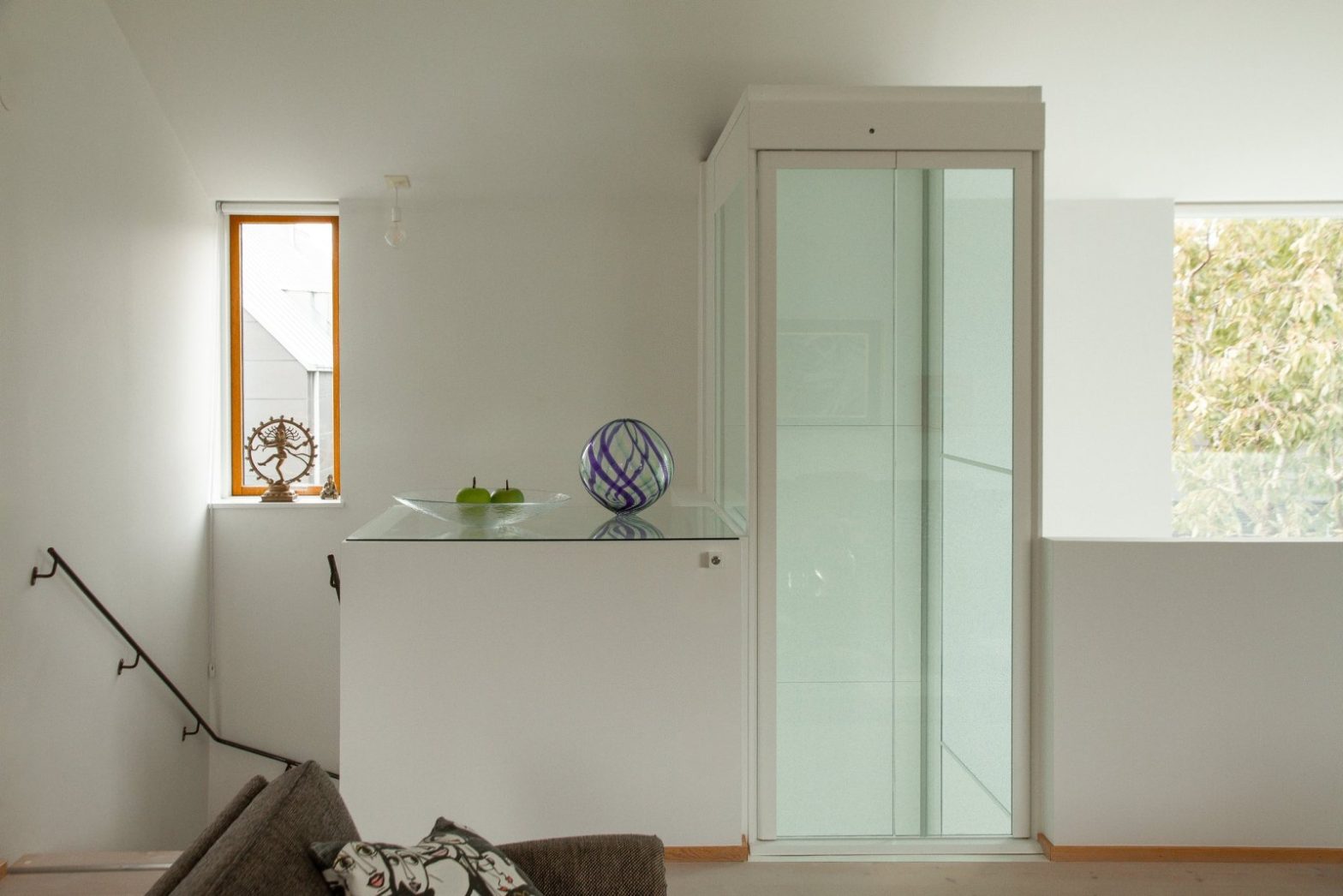
Stairs can turn familiar parts of home into daily obstacles. A home lift can make every level easier to reach. Understanding how a home lift improves quality of life means looking beyond mobility: a lift can support independence, help family members share a multilevel home and make it easier to move everyday items between floors.
It’s understandable to focus first on whether a lift could help an older relative or someone recovering from an injury move around more comfortably. Falls are a serious concern for older Australians, so reducing reliance on stairs may address one source of risk, though it cannot remove every fall hazard in the home.
This article explains how lifts can support multigenerational living, make routines such as moving shopping and laundry between floors more manageable, and help people stay connected to the spaces they value. It also explains what a home lift can and can’t do for safety, helping families decide whether it suits their home and changing needs.
Key Takeaways
- Consider how a lift could make every level of your home more accessible for someone with mobility challenges.
- Think beyond day-to-day access: a lift can make visits easier for guests using crutches, wheelchairs or prams.
- In a multigenerational home, easier movement between floors can help family members share spaces and routines.
- A lift may reduce reliance on stairs, but it doesn’t remove every fall risk in the home.
What lifestyle benefits do home elevators offer beyond mobility?
Home lifts connect floors and provide an alternative to stairs. For Australians with disability or changing mobility, bedrooms, kitchens and shared living areas can become easier to reach.
Moving Groceries, Laundry and Mobility Aids
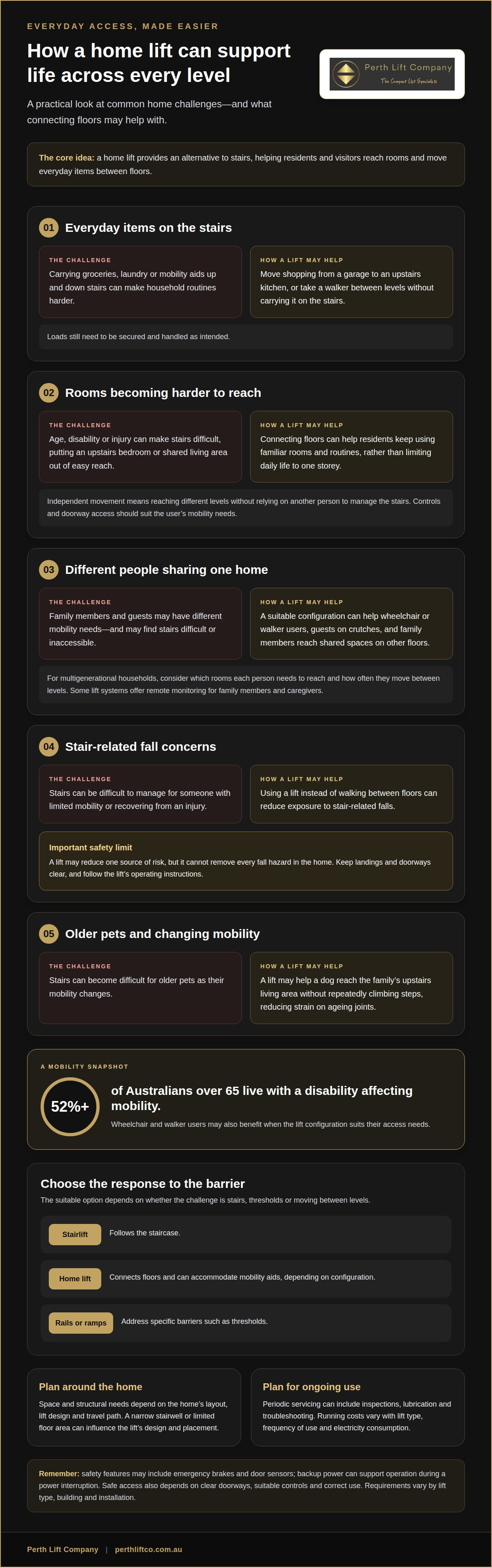
A lift can carry groceries, laundry and mobility aids between floors, avoiding the need to carry them on stairs. For example, someone can move shopping from a garage to an upstairs kitchen or take a walker between levels. This can ease household routines for residents and relatives sharing tasks. Loads still need to be secured and handled as intended.
Staying in a Multistorey Home
A lift can help residents keep using a multistorey home as age, disability or injury makes stairs harder to manage. In a two-storey house, reaching an upstairs bedroom may become difficult or unsafe for someone with limited mobility. Connecting floors can preserve access to familiar rooms and routines, rather than making relocation the only immediate response.
A stairlift follows the staircase, while a home lift connects floors and can accommodate mobility aids. Rails or ramps address specific barriers. The suitable option depends on whether the challenge is stairs, thresholds or moving between levels.
Periodic servicing supports smooth operation and can include inspections, lubrication and troubleshooting. Running costs vary with lift type, frequency of use and electricity consumption, so household costs depend on the system installed.
People who struggle with stairs may benefit, including older people, residents with disability and people recovering from injury. More than 52% of Australians over 65 live with a disability affecting mobility. Wheelchair and walker users may also benefit when the lift configuration suits their access needs.
Space and structural requirements depend on the home’s layout, lift design and travel path. Planning typically starts with assessing these factors, then selecting a position and preparing the area before installation. A narrow stairwell or limited floor area can influence the lift’s design and placement.
How Does a Home Elevator Enhance Living Standards?
A residential lift can make shared spaces easier to reach for residents and visitors. Its usefulness depends on who will use it and how the home is laid out.
Independent Movement Between Floors
Independent movement means reaching different levels without relying on another person to manage the stairs. For an older resident in a two-storey home, that can make a bedroom, bathroom or living area accessible when stairs become difficult. Lift controls and doorway access should suit the user’s mobility needs. This practical feature can support daily routines and make the home easier to use.
Safer Access Between Floors
A lift provides an alternative to walking up or down stairs, which can reduce exposure to stair-related falls. For example, someone using crutches after an injury may find a lift easier to use between floors. Keep the landing and doorway clear, and follow the lift’s operating instructions. A lift can reduce one source of risk, but it doesn’t make every part of a home risk-free.
For guests using crutches or wheelchairs, step-free access between levels can make visiting a multistorey home more practical. A suitable lift configuration can accommodate mobility aids, while clear entry space makes boarding and exiting easier. This can help hosts include guests in upstairs meals or family gatherings, rather than limiting visits to one storey.
Older pets can also find stairs difficult as their mobility changes. A lift may help a dog reach the family’s upstairs living area without repeatedly climbing steps, reducing strain on ageing joints.
Australian building and lift safety requirements depend on the lift type, the building and the installation. The design and installation need to account for the applicable requirements; the relevant details vary between residential lift systems.
Safety features may include emergency brakes and door sensors, while backup power can support operation during a power interruption. These features don’t remove every risk: safe access also depends on clear doorways, suitable controls and correct use.
To explore options for different home layouts, view residential lift options.
Are elevators suitable for multigenerational families?
A home lift can connect the different routines and access needs within a multigenerational household. Families considering how a home lift improves quality of life can think about how each person uses the home now and how those needs may change.
Supporting Multigenerational Family Life
A home lift gives relatives with different mobility needs a shared way to reach the home’s levels. For example, a grandparent could access an upstairs sitting room while other family members use it for study or shared activities. That can help the household use its spaces together without making stairs the only route. Some lift systems also offer remote monitoring for family members and caregivers.
Access in Multi-Storey Homes
In a multistorey Perth home, a lift can connect bedrooms, living areas and other rooms across floors. Families can consider which spaces each person needs to reach and how often they move between them. Planning around those routines helps make the lift part of the home’s functional layout, rather than an isolated feature serving only one floor.
Ageing in Place
Ageing in place means continuing to live in a familiar home as accessibility needs change. A lift may help an older family member reach rooms on different levels, rather than limiting daily life to one storey. Considering how a home lift improves quality of life means weighing privacy and independence alongside practical family support, including whether relatives need access to the same areas.
Future-Proofing a Multi-Level Home
Future-proofing means planning for possible mobility changes before stairs become a significant barrier. Consider the lift’s position, the route between floors and whether a wheelchair or walker needs to enter. These details shape how useful the lift will be for different household members. Accessibility may also be useful to future buyers, but it doesn’t determine a home’s resale value on its own.
Home falls and injury risks for older Australians
Falls in the home account for 38% of injury-related deaths among elderly Australians. One in four Australians aged 60 and over experiences at least one fall each year. Stairs are one part of this risk, particularly for people whose balance, strength or mobility has changed.
The consequences can be serious. Hip and thigh fractures account for 38% of fall injuries among elderly Australians, while head injuries account for 20%. Hospital stays for fall-related injuries average up to seven days. These figures show why reducing repeated stair use can matter, especially in a multistorey home.
A home lift provides another route between levels, reducing the need to climb stairs for everyday tasks. It doesn’t remove other hazards, such as slippery floors or cluttered walkways. For homeowners, installing a lift is a practical accessibility decision, not simply a luxury addition: it changes how residents move through a multistorey home. Careful operation and clear access around the lift remain important.
Residential lift options include home elevators, vertical platform lifts and stairlifts, including chair and platform styles. The right type depends on the person’s mobility, the route between floors and the home’s layout. Council approval or a building permit may be required, depending on the proposed installation, structural work and local requirements. Check with your local authority as part of planning.
Reducing stair trips may support peace of mind, but a lift is only one part of managing fall risks. It can address stair access, but it cannot prevent every fall or replace attention to other hazards around the home.
For a stair-based alternative, explore Delta Platform Stair Lifts as one option for accessing levels.
Perth Lift Company
Perth Lift Company helps homeowners consider access options when stairs become difficult or family mobility needs change. Its range includes residential elevators, compact domestic lifts, vertical platform lifts and delta platform stair lifts. Each option addresses different access needs, so consider the home’s layout, the levels to connect and the intended users when choosing a suitable solution.
For a multigenerational household, this means weighing everyday access for residents alongside visits from family members who use mobility aids. Perth Lift Company’s lift options can support safer movement around the home and help make its levels more accessible, showing how a home lift improves quality of life. Contact Perth Lift Company to discuss your home and the access challenges you’re looking to address.
Plan for the way your home may change
Choosing a lift is a chance to shape a home around the people who live in it, now and as their needs evolve. Start by considering which rooms matter most, who needs access between levels and how a lift could fit the home’s layout. Those priorities can guide a practical conversation about design options, including Pneumatic Vacuum Elevators (PVE 30, 37, 52).
Considering how a home lift improves quality of life means looking beyond the installation itself. Think about how easier access could support familiar routines and shared spaces, without assuming a lift removes every household hazard. A clear picture of your family’s needs can help you weigh the options with confidence.
Discuss your home with Perth Lift Company and take a considered next step towards more accessible living.
Frequently Asked Questions
Can an elevator help seniors stay in their homes longer?
Yes, a home elevator can help older residents keep accessing essential rooms as stairs become difficult. Consider which levels contain bedrooms, bathrooms and spaces used every day. For instance, if a resident’s bedroom is upstairs, connecting that level with the main living area may help them continue using familiar parts of the home as their mobility needs change.
How Can A Home Lift Improve the Daily Life Of Families?
A home lift can make different levels easier for household members to access independently, supporting shared use of the home. For example, a family member with limited mobility may be able to reach an upstairs study while others use the same space. Planning around everyone’s usual routes and access needs helps the lift serve family routines, rather than only one person’s immediate requirements.
How do home elevators improve safety for active seniors?
A home elevator can reduce the need to use stairs, but it cannot prevent every fall around the home. Clear access at the lift entrance and following operating instructions are practical safety measures. Perth Lift Company states that its lifts comply with relevant Australian Standards, including AS1735, and recommends annual servicing by qualified technicians to support safe, reliable operation.
Why should homeowners consider a home elevator?
Homeowners may consider a lift when stairs limit access to important rooms or make a multilevel home harder to use. The right solution depends on the person’s mobility needs and the home’s layout. For example, a wheelchair user may need a different access arrangement from someone who can transfer to a stairlift seat.
Will a home elevator help me with daily tasks?
A lift can make everyday movement between levels more manageable. A resident who spends time in an upstairs living area, for instance, may be able to reach it without repeatedly climbing the stairs. Consider which routine activities involve changing floors, who carries them out and whether access needs differ between household members. That gives a clearer picture of where a lift could help.
Can home lifts increase property value or support ageing in place?
A home lift may support ageing in place by making rooms on different levels easier to access as mobility changes. It may also appeal to buyers seeking a more accessible home, but it doesn’t guarantee a higher sale price. The lift’s usefulness depends on the property layout and future occupants’ needs, so its value is practical and specific to the home.